
Colour of amulets
Colour was never a matter of chance for Egyptian amulets: each colour carried a meaning, and the materials used to obtain it changed over time. This page describes the frequent, rare and altered colours of amulets, then the main types of multicoloured amulets.
Frequent colours
- Green: regenerative colour, evokes vegetation, life and resurrection. Mainly faience, rarely minerals (feldspar, amazonite, olivine)1
- Blue: regenerative colour, evokes the sky and the night. Faience or blue minerals (lapis lazuli, rarely turquoise)
- Black: less abundant colour, evokes the mud of the Nile. Black minerals (hematite, obsidian)
Note
1 Some beryl amulets have been reported. Beryl is easily confused with feldspar. Moreover, beryl was never found in the richest tombs or treasures, but only in jewelry of the Graeco-Roman Period and later, see Ref #15 pp. 40-41
Rare colours
- Yellow: evokes gold. Mainly faience, glass and gilded amulets, rarely minerals
- Red: evokes blood, a regenerative or negative colour. Mostly red minerals (carnelian, red jasper), rarely faience or glass
- White: evokes cleanliness and ritual purity, or silver. Very rare, glass or faience
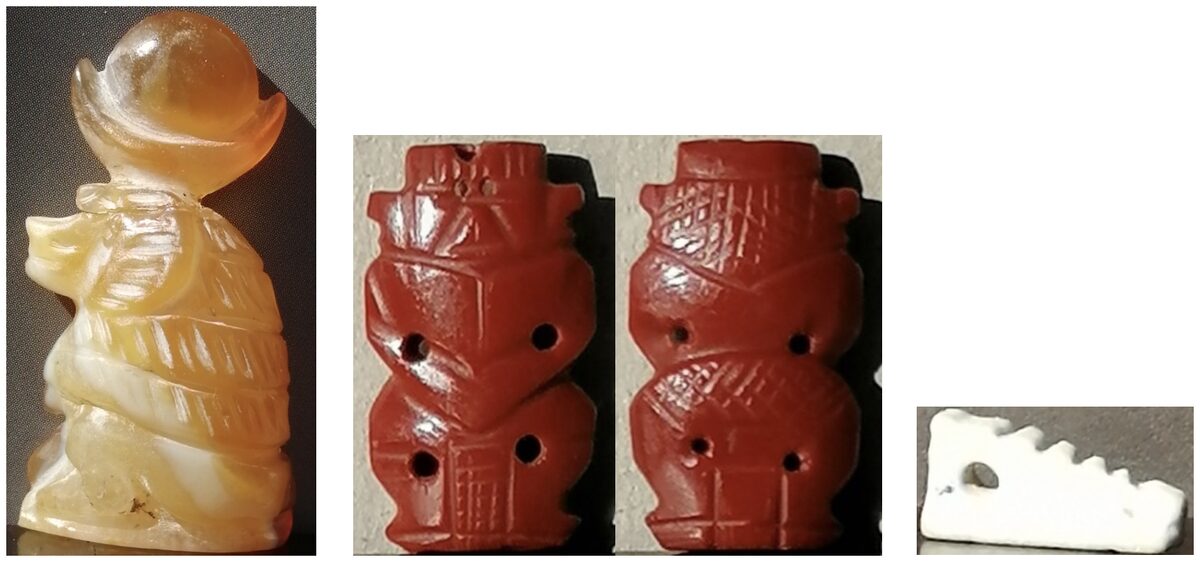
Rare colours: yellow, red, white. Agate squatting baboon god Thoth H 3.7, New Kingdom, Dynasty 18; red jasper god Bes H 2.7, New Kingdom, Dynasty 18; white glazed staircase L 1.3, Late Period. Private collection DA
Other rare colours
Violet, orange, and delicate and unusual nuances of green, blue, yellow, red, etc. They were used from Late Dynasty 18 to Dynasty 22-23, periods when reproducing every nuance of colour became a priority1. Numerous fruit and floral motifs were made with these delicate colours.
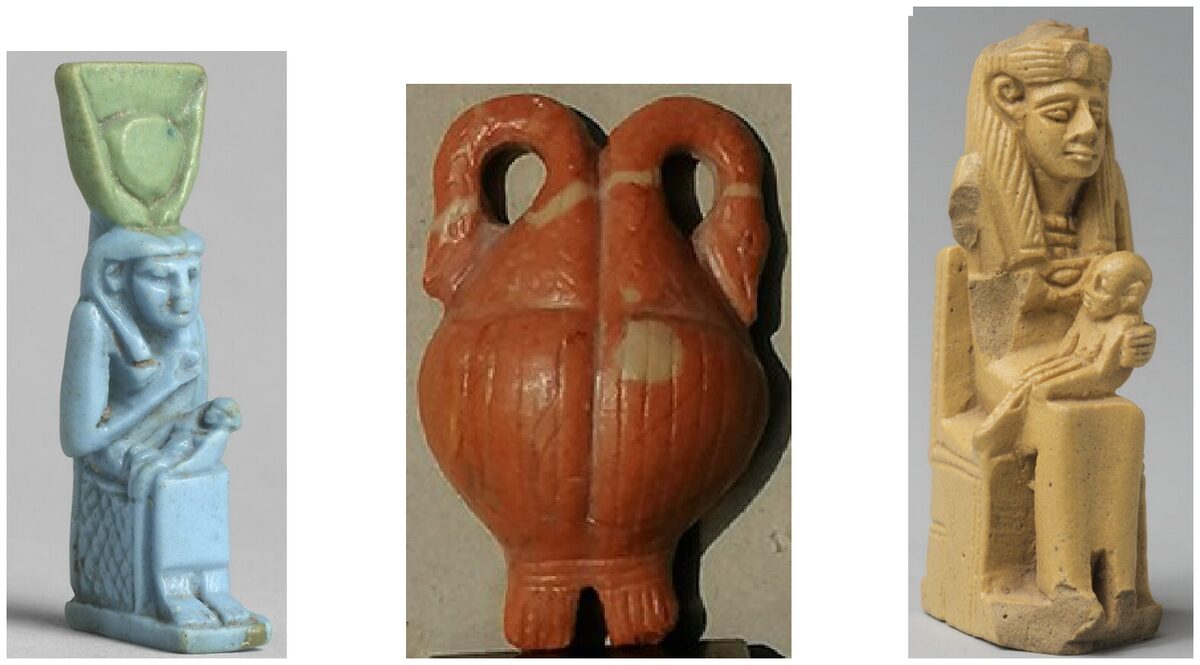
Green and blue glazed Isis-Hathor suckling Horus H 4.3, Dynasty 22-23, © 2013 Musée du Louvre/Thierry Ollivier #AF 13077; trussed double ducks in orange breccia H 4.0, New Kingdom, Private collection DA; dark yellow glazed Isis-Hathor suckling Horus H 4.7, Dynasty 22-23, © 2017 Musée du Louvre/Christian Décamps
Reference
1 Caubet A & Pierrat-Bonnefois G. Faïences, Faïences de l’antiquité, de l’Egypte à l’Iran, 2005. Musée du Louvre Editions & 5 Continents Editions, Paris, pp. 72-79, and p. 104
Altered colours
The original colour of an amulet can be altered after manufacture: deposits of natural concretions, deposits of bitumen or natron, or burning. The reddish colour of burned faience amulets is due to rubification.
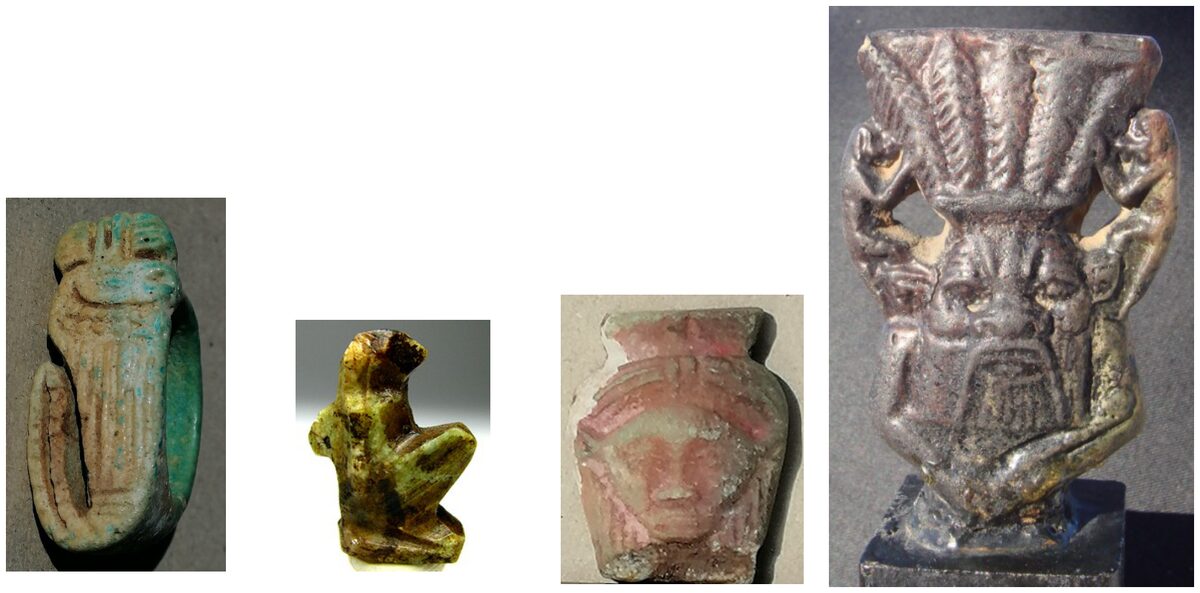
From left to right: deposition of natural concretions; deposition of bitumen or natron; burned faience amulets, where the reddish colour occurs by rubification. Private collection DA
Multicoloured amulets
‘Cloisonnés’ of semiprecious stones
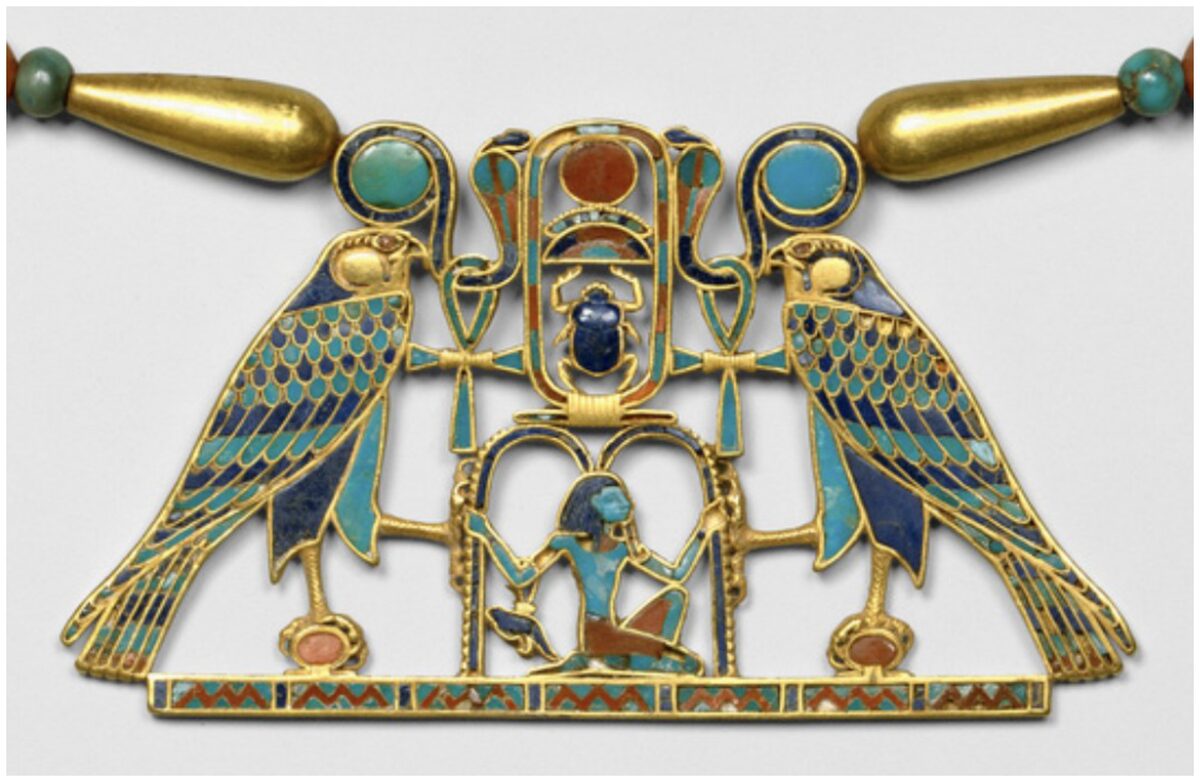
Gold, turquoise, carnelian and lapis lazuli amuletic pectoral of a princess with central god Heh H 4.5, Middle Kingdom, Dynasty 12. The Metropolitan Museum of Art #16.1.3a,b
Faience
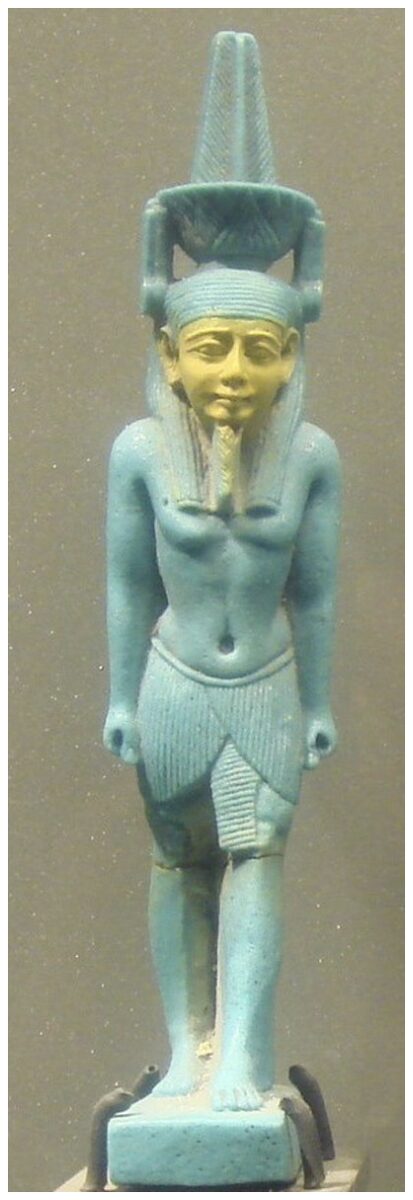
Bichrome glazed god Nefertem H 10.3, Late Period, Dynasty 30. Musée du Louvre #E 3502, © Photograph D. Attaix
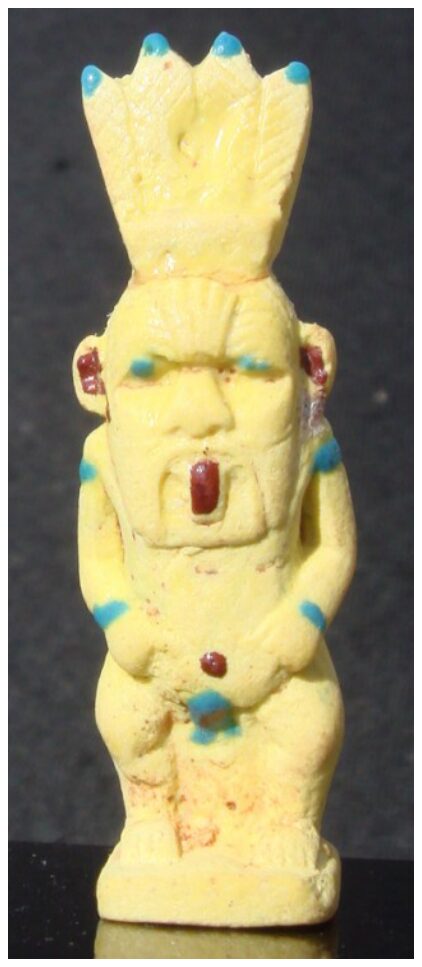
Trichrome glazed god Bes H 3.5, New Kingdom, Dynasty 18, Amarna Period. Private collection DA
Nielloed bronzes
Nielloed bronzes are encrusted with gold, silver and/or electrum.
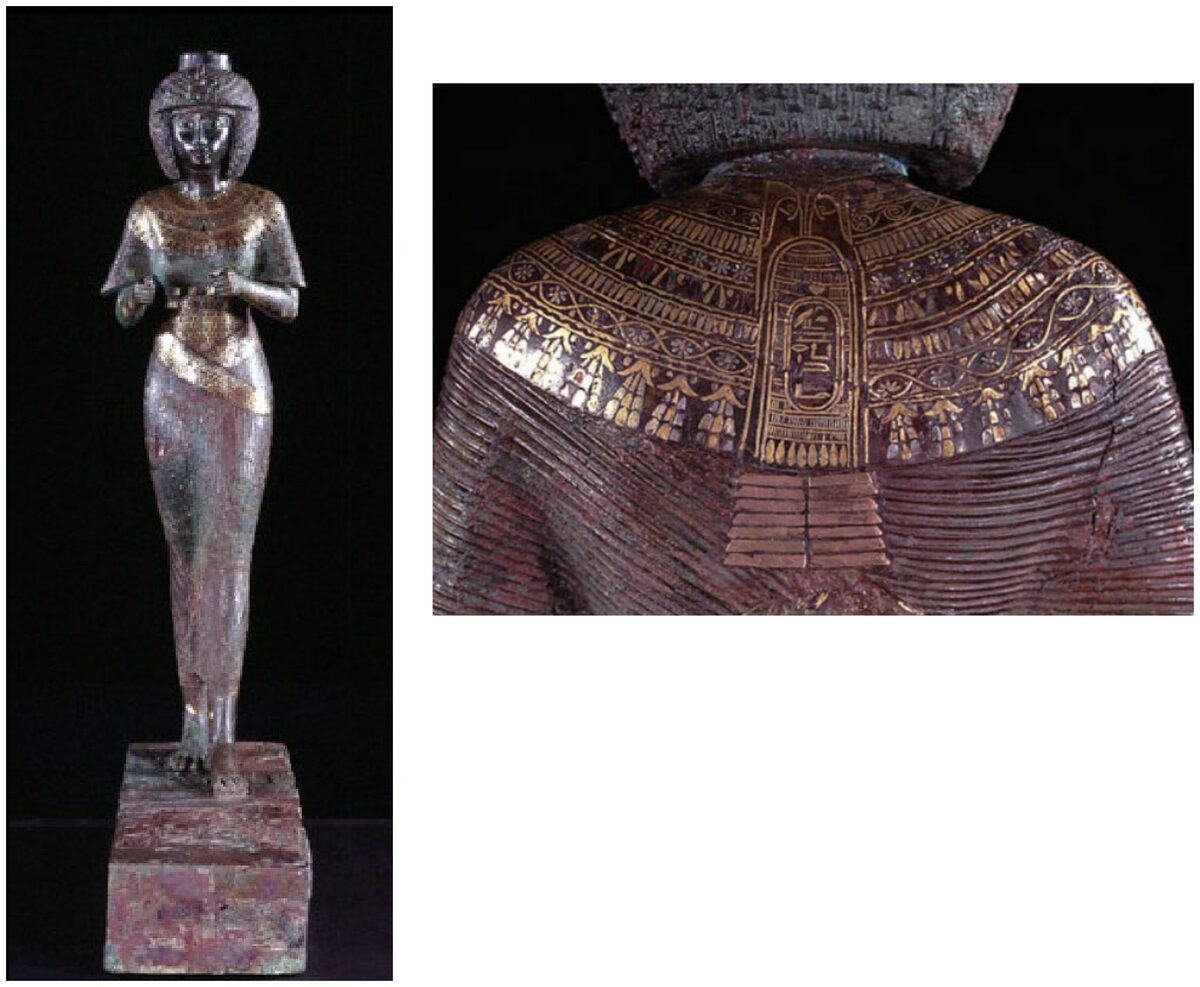
The ‘Divine Adoratrice Karomama’ is the masterpiece of nielloed bronze, bought in Egypt by Champollion. H 59.0, Third Intermediate Period, Dynasty 22. © 2016 Musée du Louvre/Christian Décamps #N 500
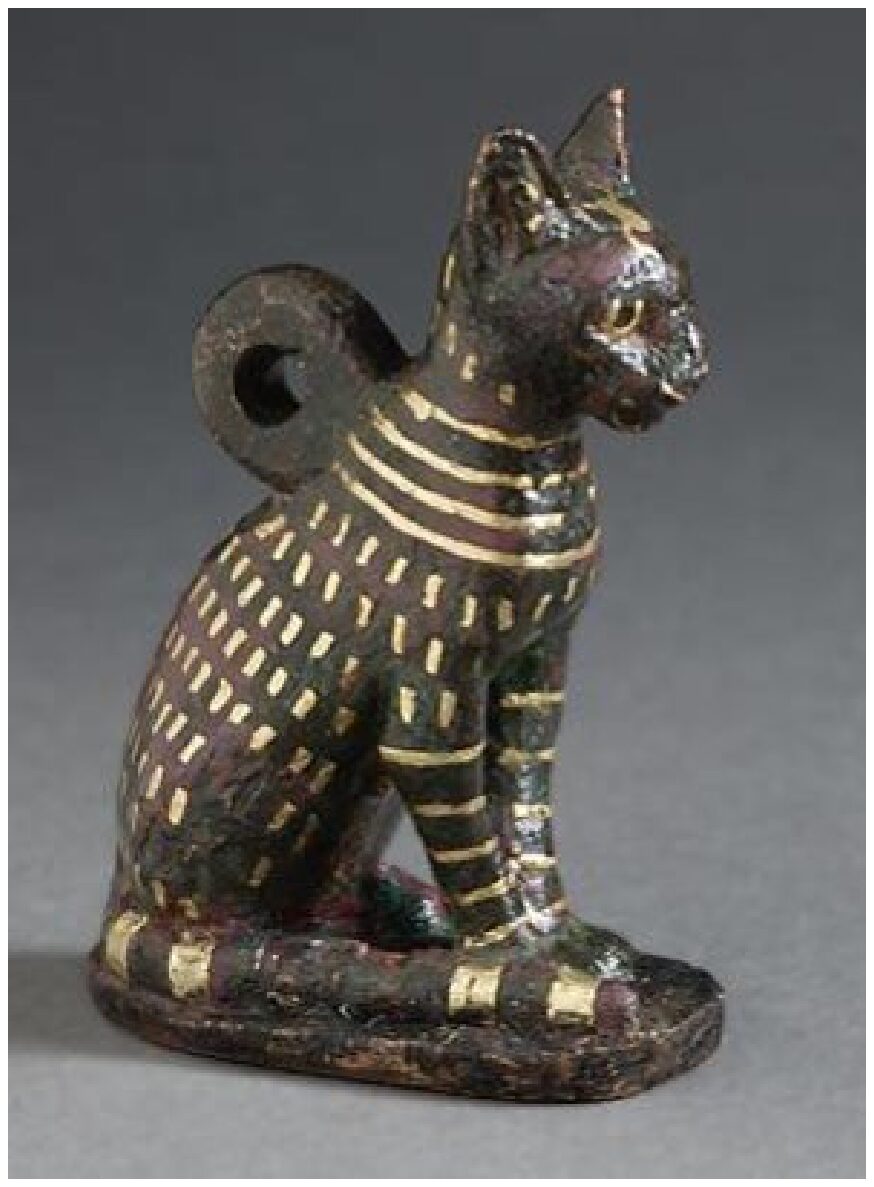
Goddess Bastet (symbol of maternity). These amulets were gifts for mothers during the New Year celebration. H 2.9, Third Intermediate Period. © 2003 Musée du Louvre/Christian Décamps #E 10661
Amulets in gold, electrum and silver
Except those of the royal families and of the very upper class, most amulets in precious metals are made of hollow material formed of soldered parts.
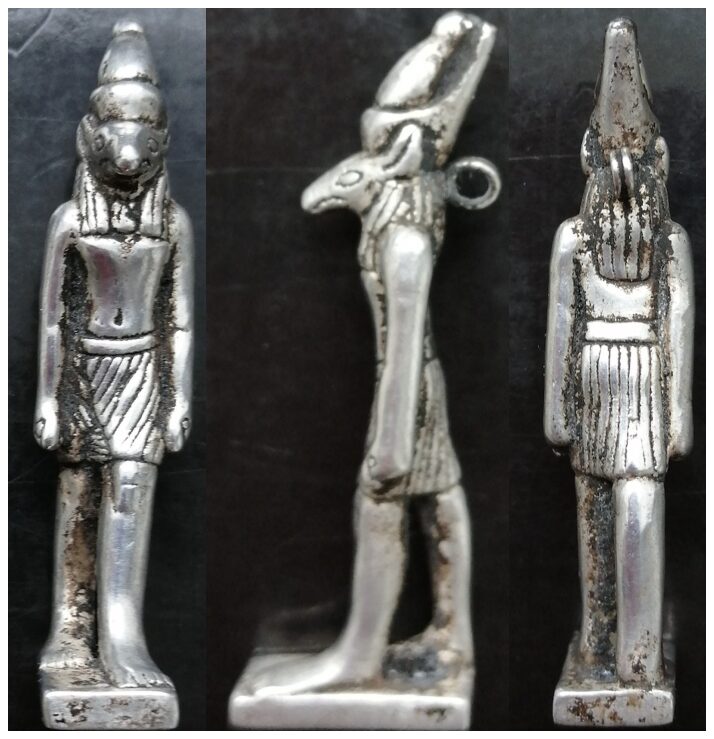
Silver hollow striding god Seth with the double crown H 5.6, presumably Dynasty 19. Private collection DA
A simpler and less costly solution was to hammer a very thin sheet of gold on a sculpture in either steatite or hard wood (sycamore).
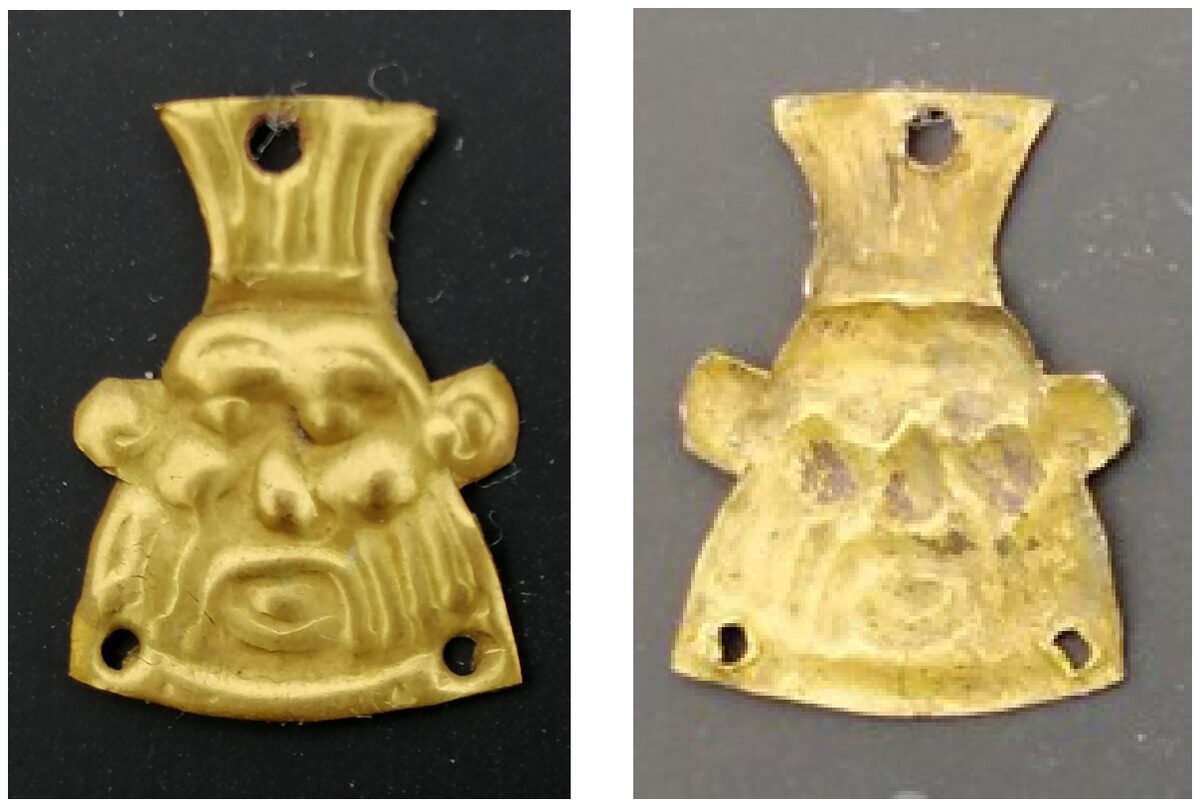
Gold ‘appliqué’ head of the god Bes H 1.4, thickness of the sheet < 0.04, Late Period. Private collection DA
Glass
Glass appeared in Mesopotamia by about 2500 BC and was significantly imported and manufactured in Egypt from the New Kingdom onwards.
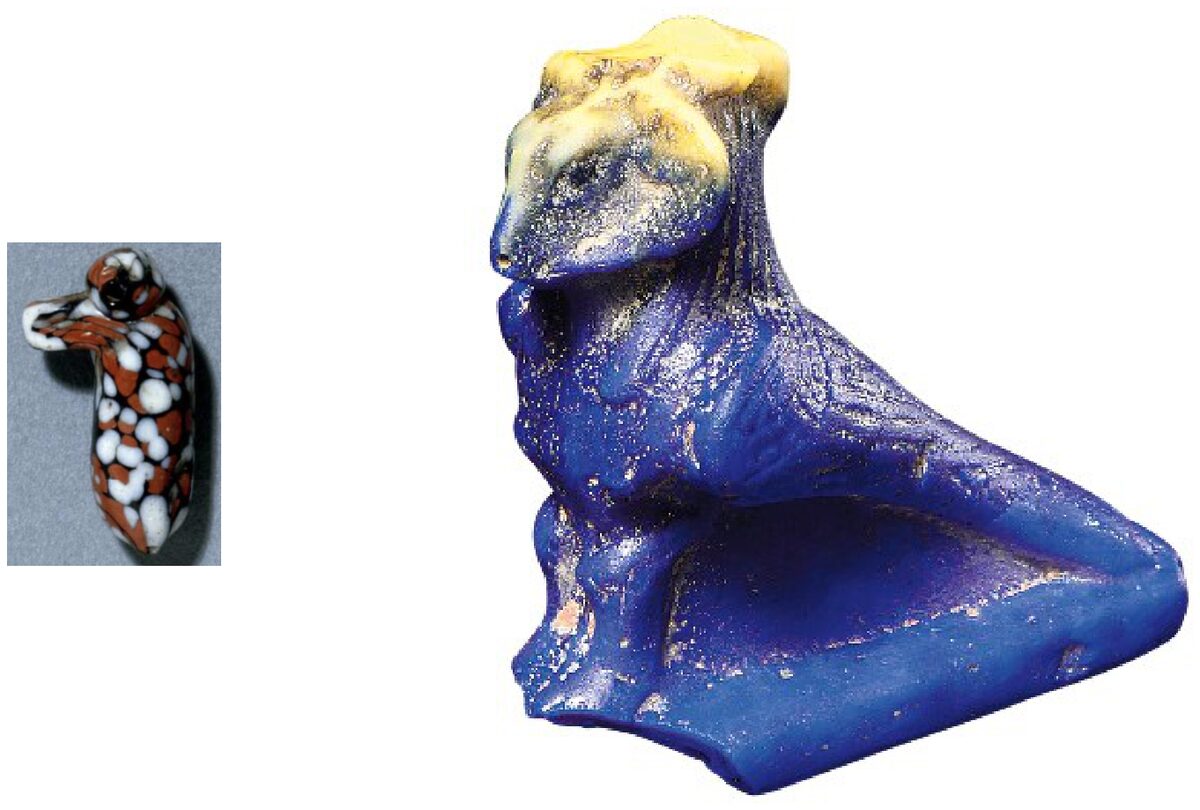
Glass goddess Taweret H 2.4, New Kingdom, Late Dynasty 18, Amarna Period, © The Trustees of the British Museum #EA6242; glass ram-headed falcon L 6.0, Ptolemaic Period, Christie’s The Groppi Collection, Sale 7758, lot 92, 26 April 2012