Conclusion
Beyond their religious and magical meaning, Egyptian amulets are remarkable for their technical quality, the inventiveness of their makers and their great diversity.
Technical achievements
The artist made a tiny but highly detailed openwork amulet.
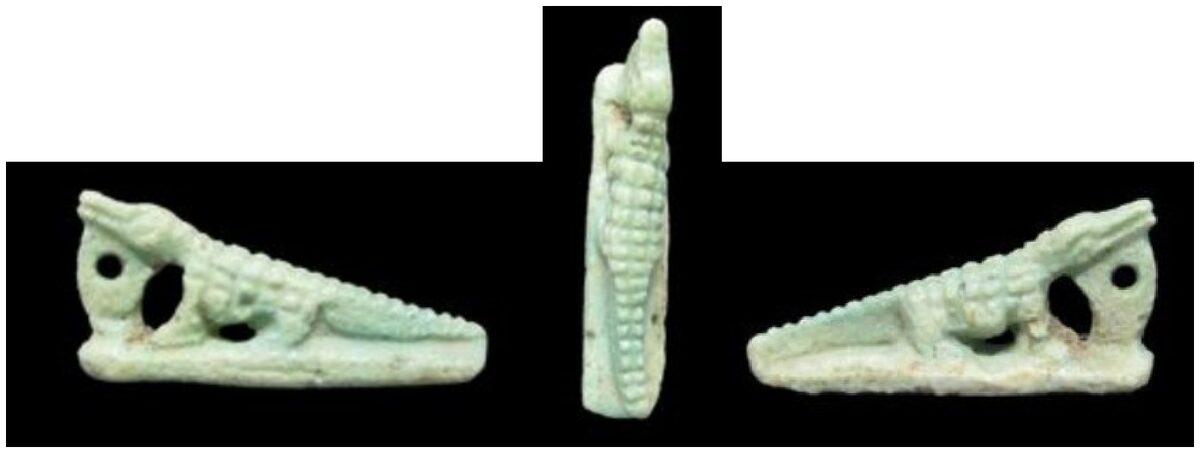
Green glazed crocodile L 2.0, presumably Third Intermediate Period. Private collection DA
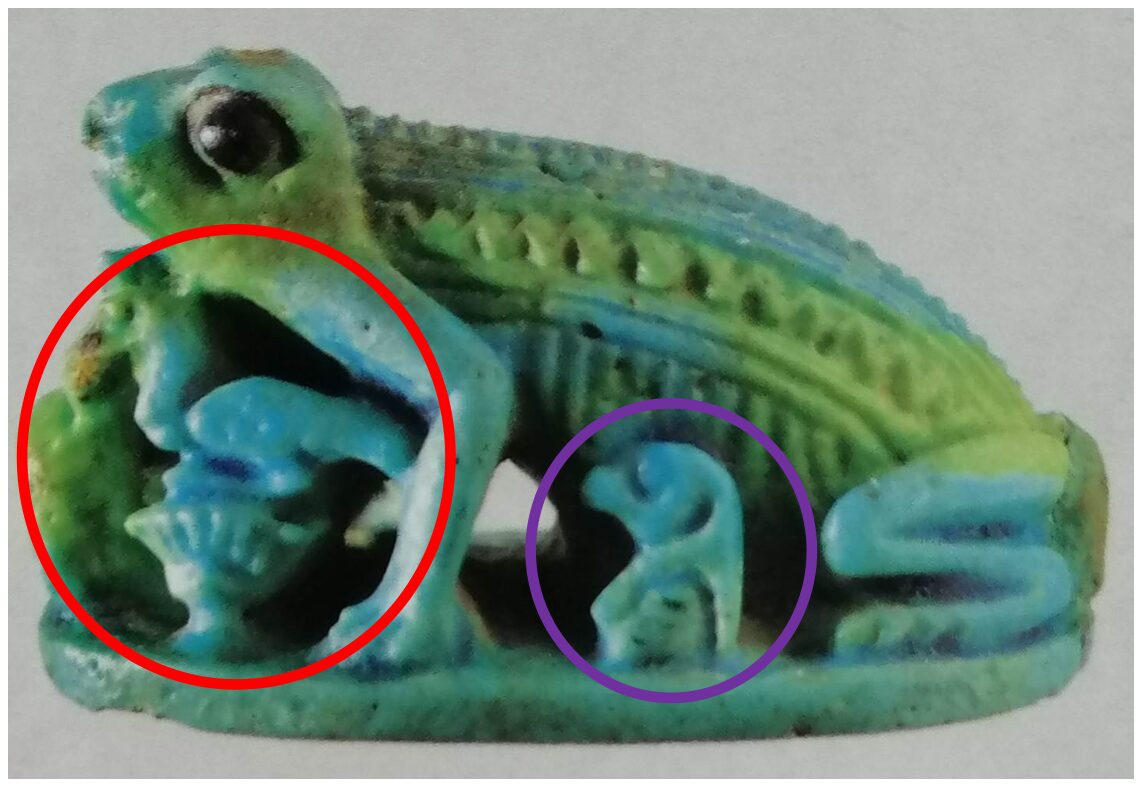
Multicoloured openwork glazed amulet: frog with, on each side, an ibis standing on a papyrus and a falcon head L 3.1, Third Intermediate Period, Dynasty 22-23. © 2005 Musée du Louvre/Christian Décamps #E 10863
How did the artist manage not to break the raised ears (T 0.3) with rudimentary tools about 4,000 years ago?
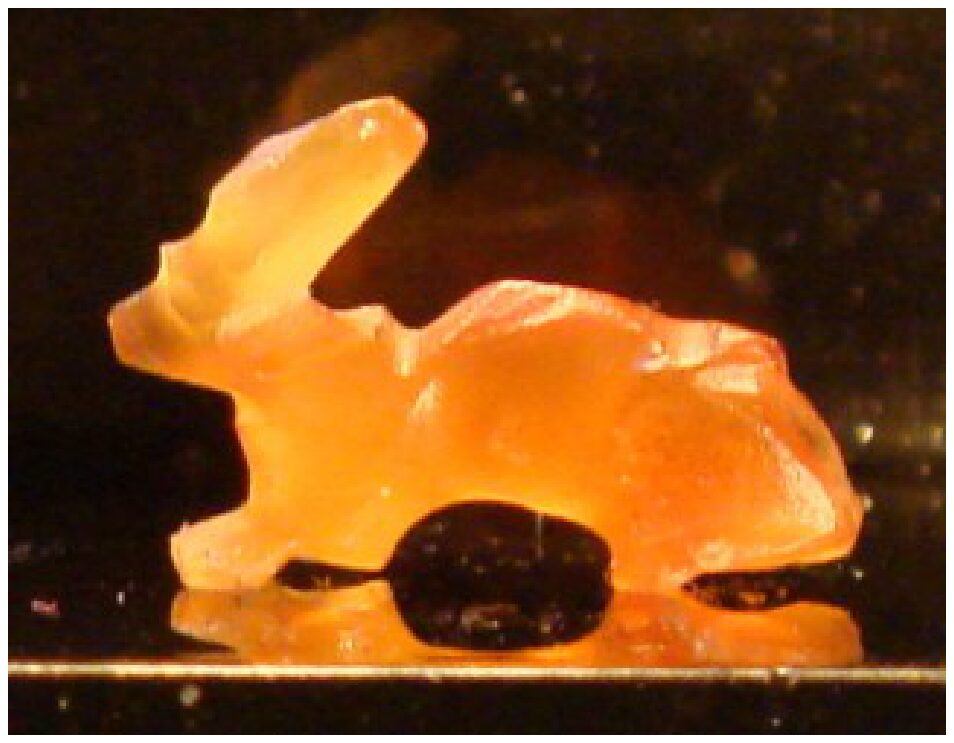
Carnelian hare (symbol of swiftness and fertility) L 1.4. Carnelian hardness is like quartz, 7 on the Mohs scale. Old Kingdom, Dynasty 6 to First Intermediate Period, Dynasty 8. Private collection DA
The artist took advantage of defects in the carnelian to denote the eye, hearing and mouth.
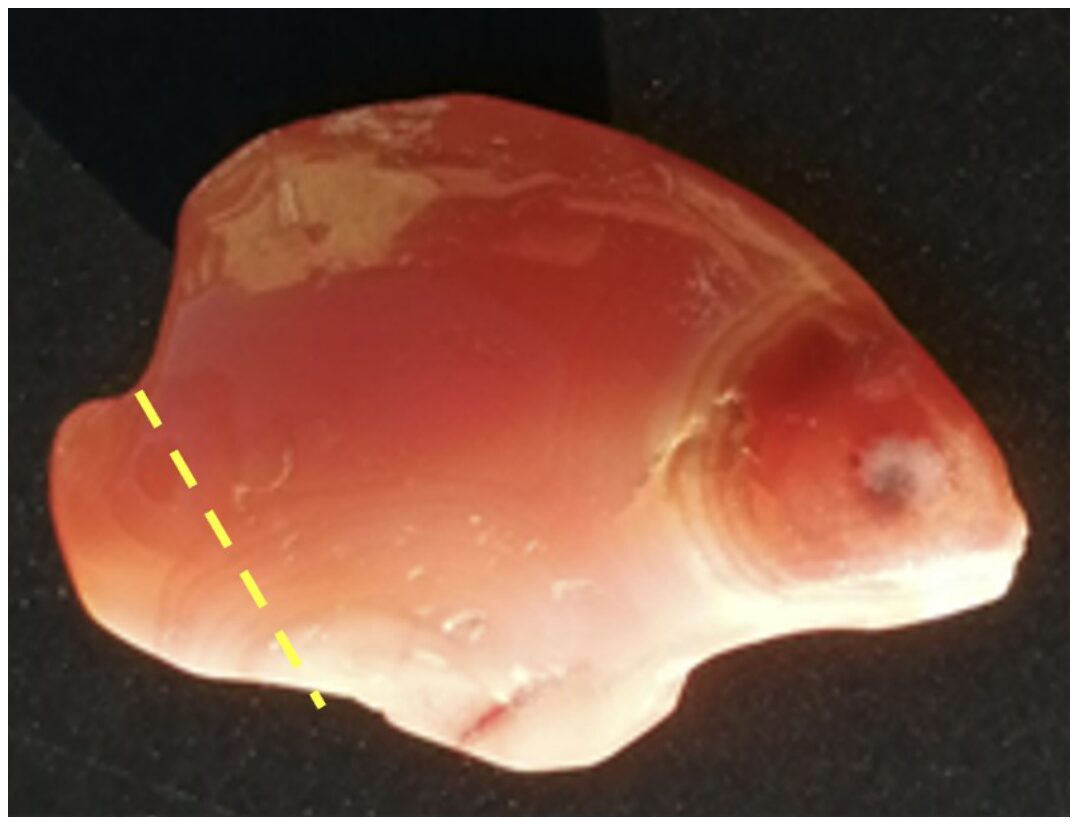
Carnelian fish L 1.8. The yellow broken line denotes the diagonal suspension hole. Middle Kingdom. Private collection DA
The artist used white veins (red arrows) in the stone to denote broken necks.
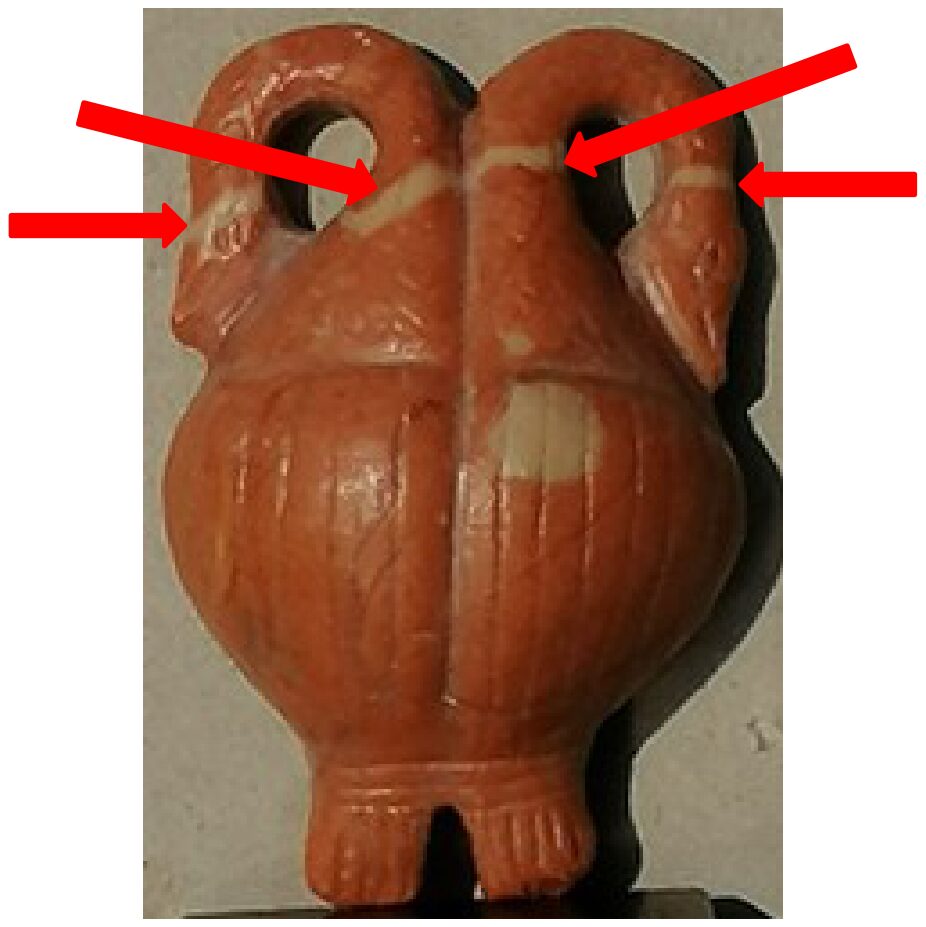
Trussed double ducks in orange breccia H 4.0, presumably New Kingdom. Private collection DA
On the left, the artist carved the wings so that they are fully translucent. On the right, a rare stylization.
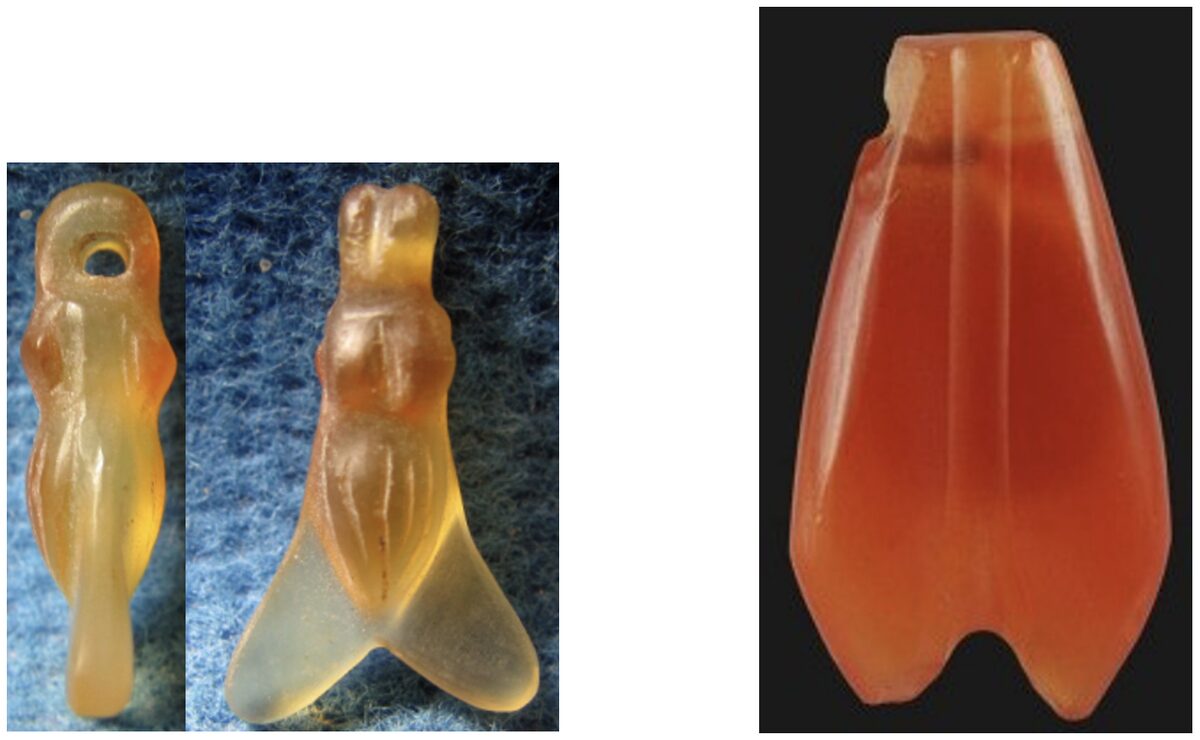
Carnelian fly H 1.3, New Kingdom, Dynasty 18; carnelian insect H 1.7, Late Period?. Private collection DA
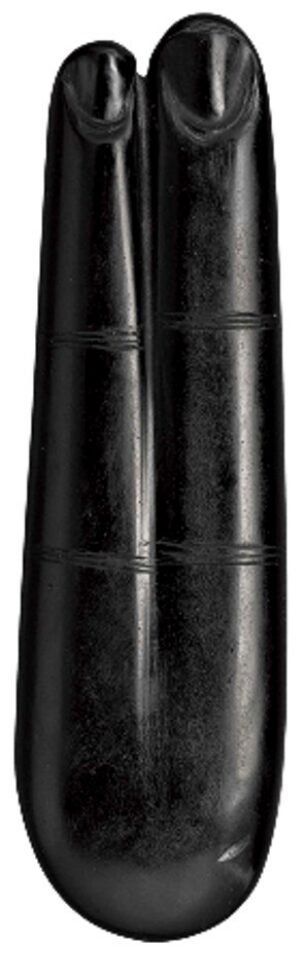
Two fingers in obsidian (magically seals the incision made by the embalmers to remove the internal organs of the deceased, and prevents subsequent evil entrance) H 12.7, Late Period. Christie’s Antiquities, Sale 3748, lot 9, 4 June 2015
The artist carved the amulet so that the crescent moon and the fur are whitish, but the moon disc is almost purely yellow.
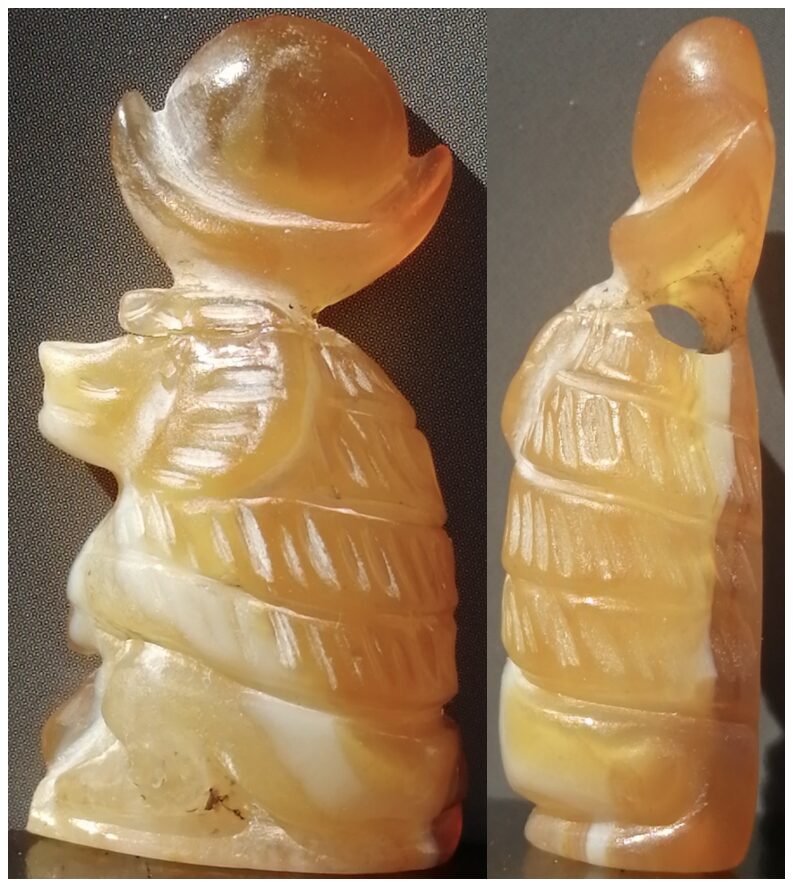
Banded agate god Thoth H 3.7, New Kingdom, Dynasty 18. Private collection DA
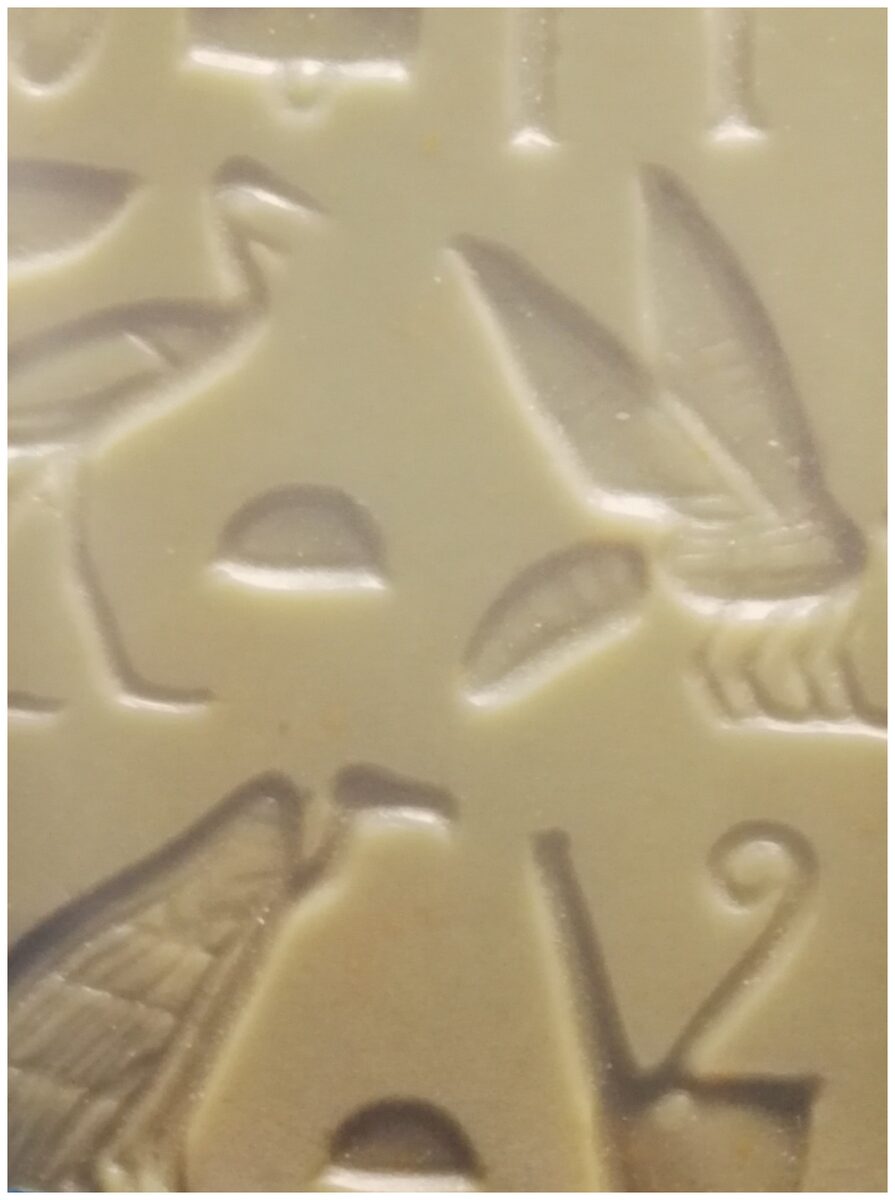
Approximate 25× magnification of a green jasper engraving. The engraving quality equals laser cutting
This tiny glass bead is highly symmetrical.
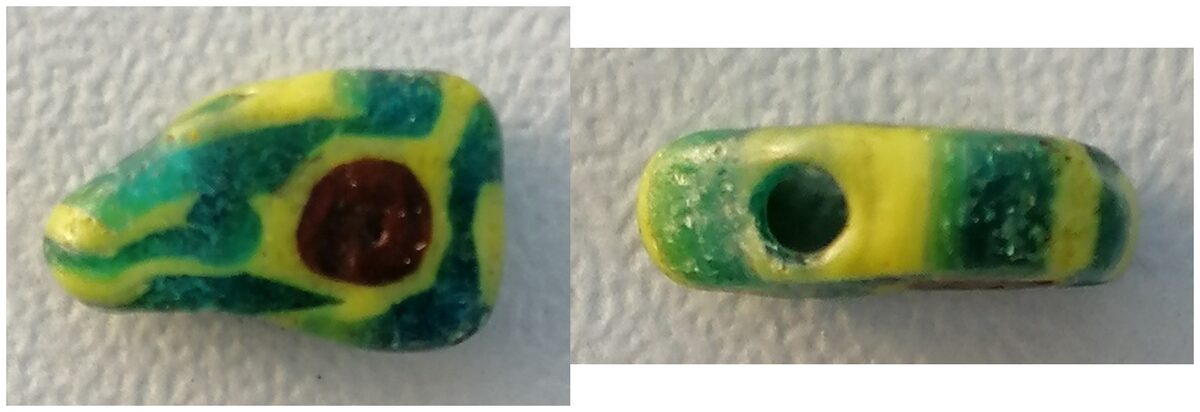
Bird’s head? (unclear significance) L 1.1, Ptolemaic Period. Private collection DA
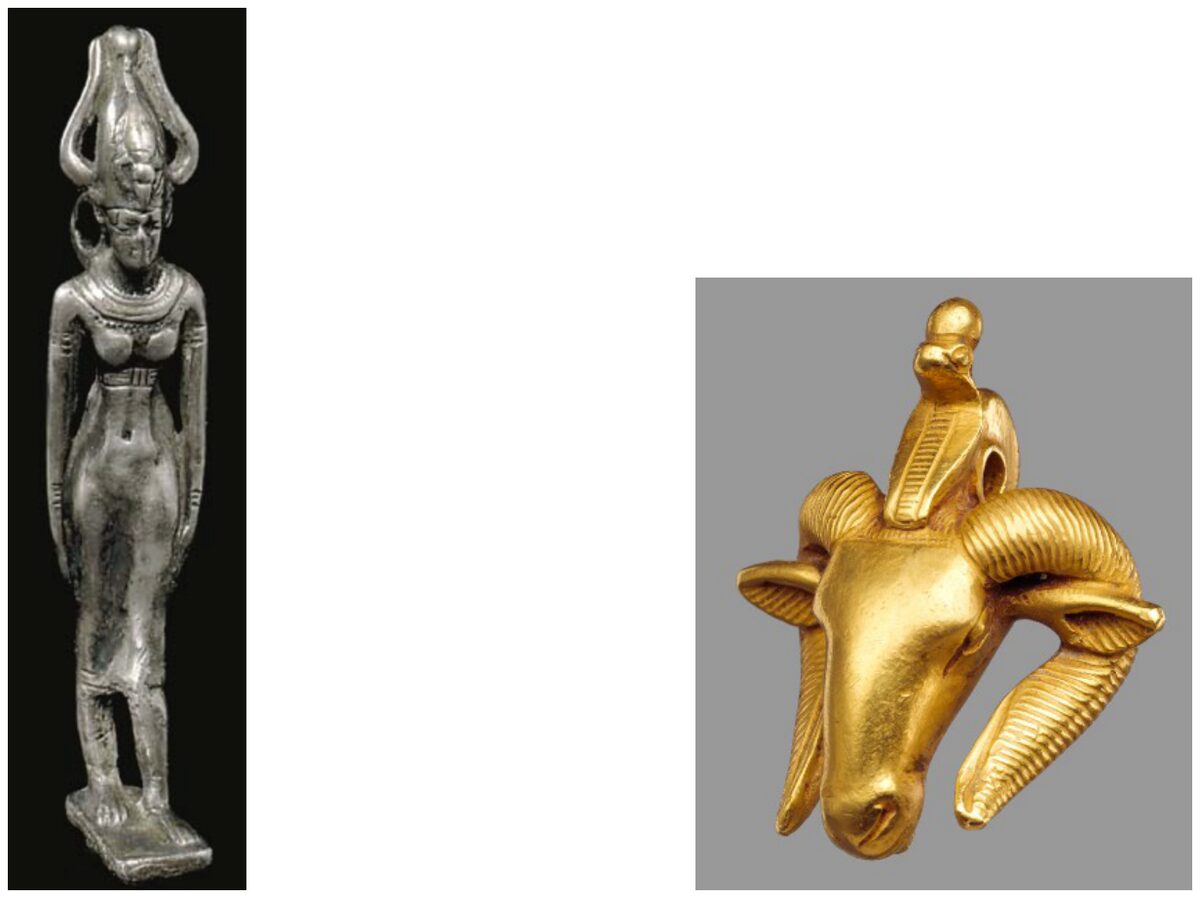
Silver goddess Satis H 6.7, Ptolemaic Period, Christie’s Ancient Egyptian art from the Harer family trust collection, Sale 1691, lot 38, 9 Dec 2005; gold ram’s head (Amun) H 4.2, Third Intermediate Period, Kushite Dynasty 25, The Metropolitan Museum of Art #1989.281.98
Proportions and conventions
Egyptian art is extremely codified and nothing was left to chance: a hypothetical grid of 18 squares runs from the ground to the hairline of a standing individual, and a striding individual is always advancing his left leg.
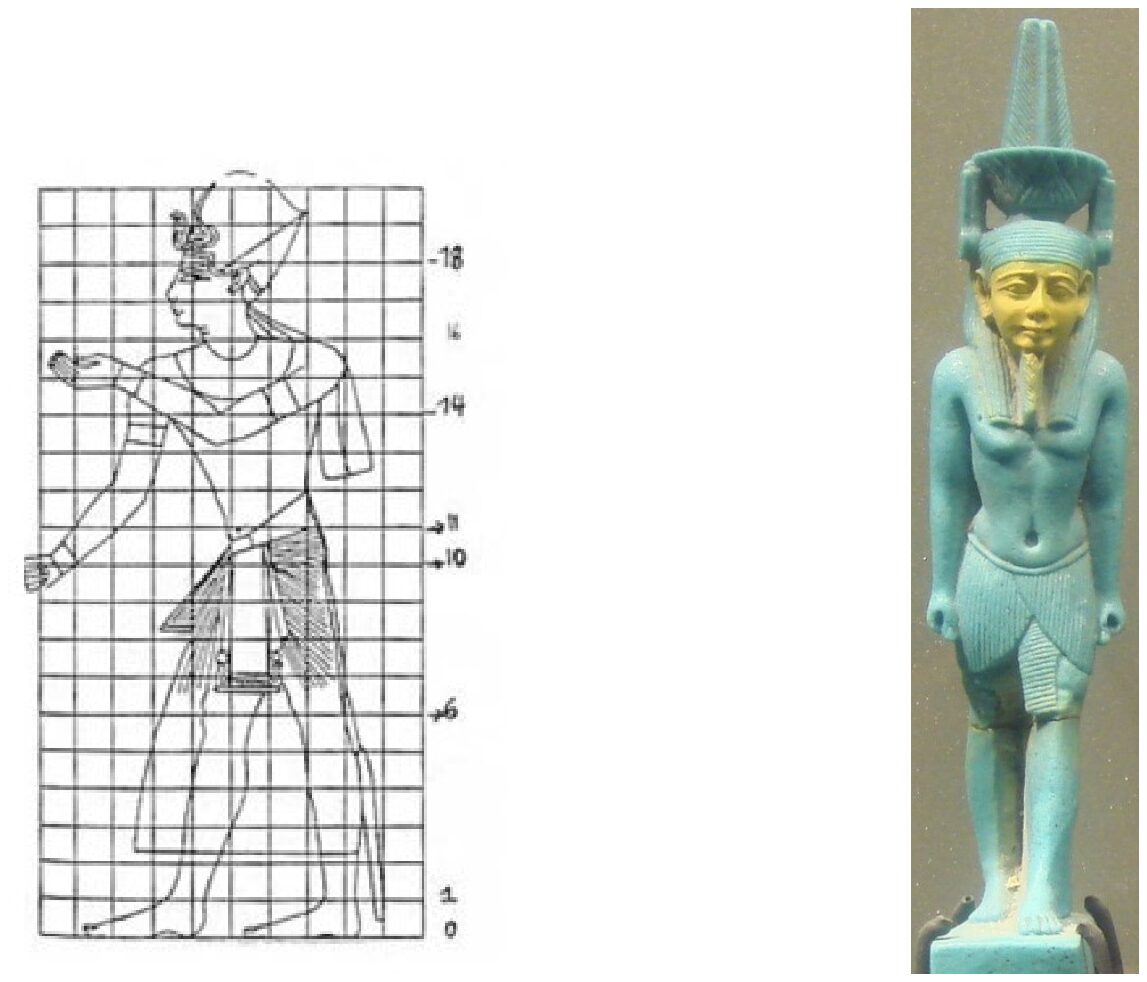
Hypothetical grid with 18 squares from the ground to the hairline of a standing individual; a striding individual is always advancing his left leg (amulet H 10.3)
Such proportions and conventions are perfectly respected on the best amulets…
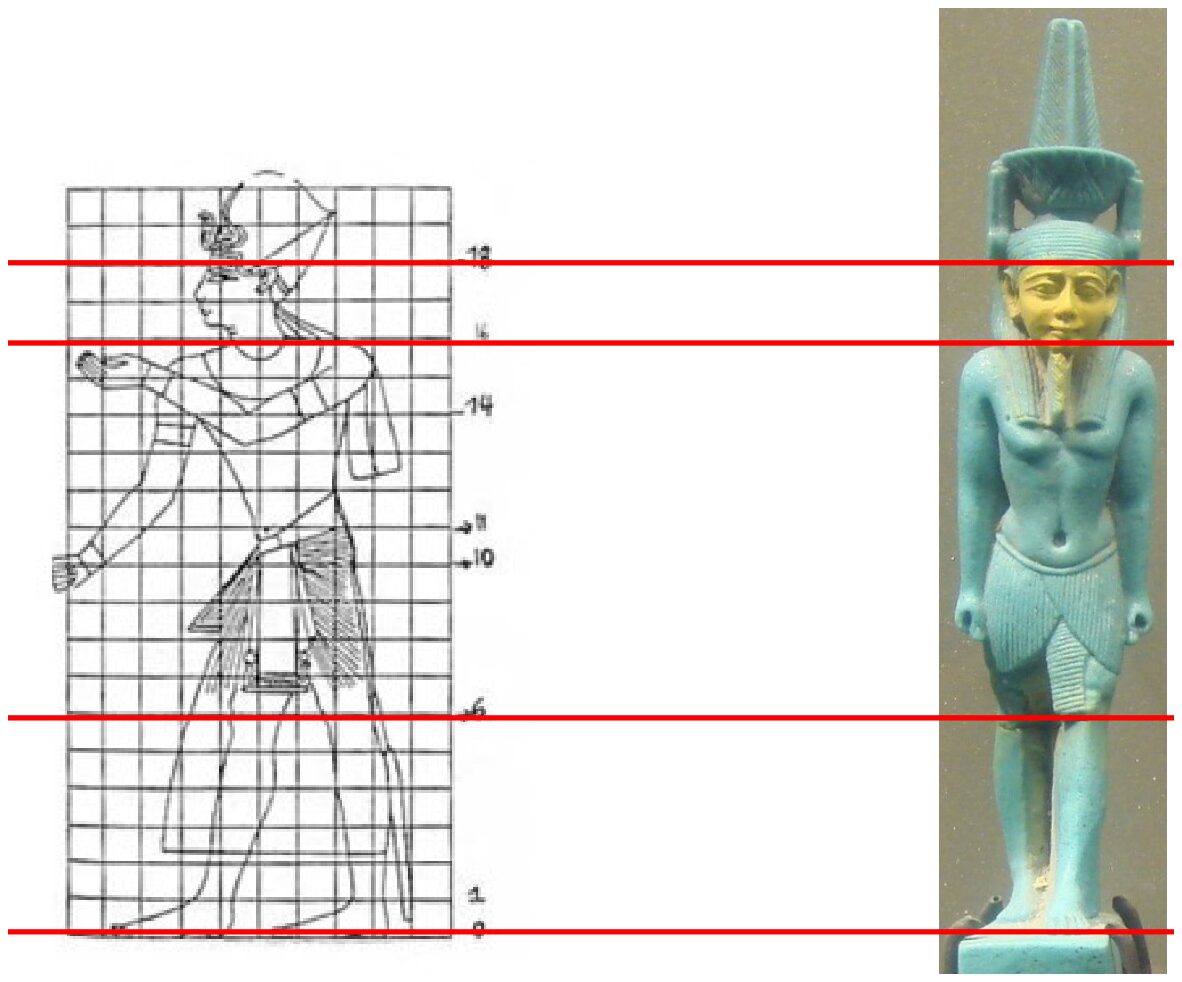
The 18-square grid applied to a striding amulet H 10.3
…and they are still perfectly respected on the best therianthropic amulets.
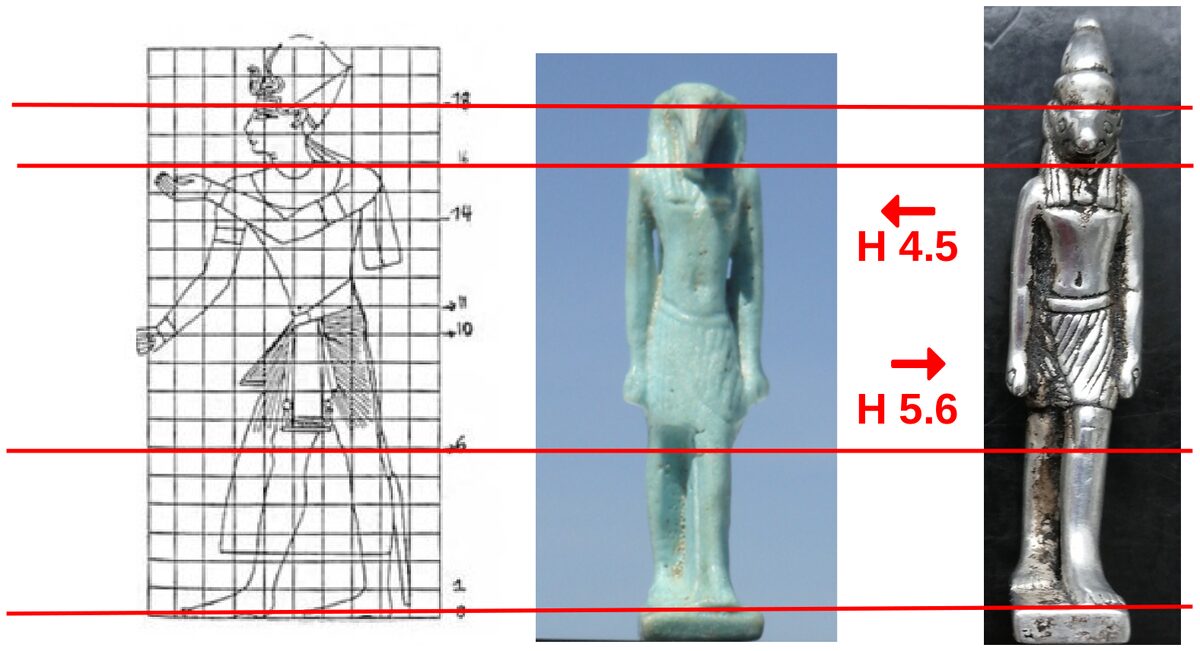
The 18-square grid applied to therianthropic amulets H 4.5 and H 5.6
Proportions are also still perfectly respected on the best amulets of a seated individual1.
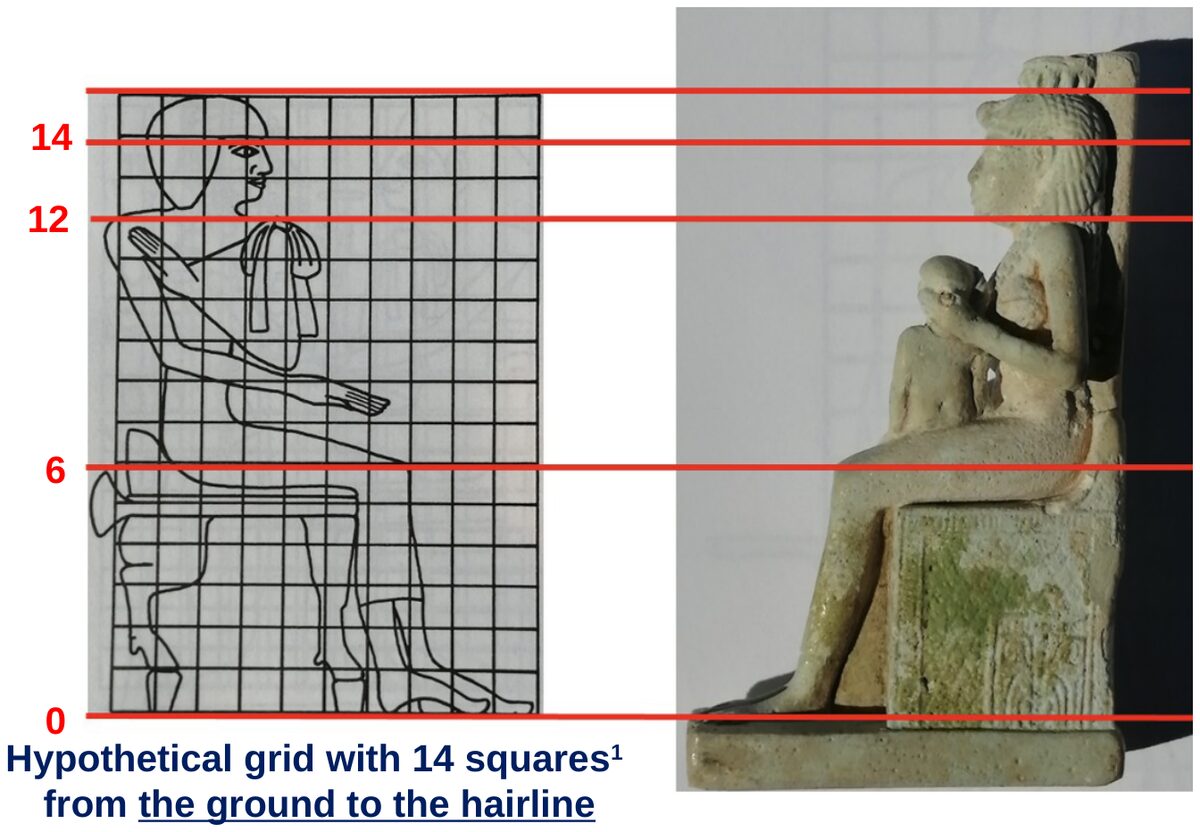
Hypothetical grid with 14 squares from the ground to the hairline of a seated individual, applied to an amulet H 7.5
Reference
1 Robins G. Proportion and style in ancient Egyptian art, 1994, Thames and Hudson, London, pp. 283
Inventiveness and technical skill
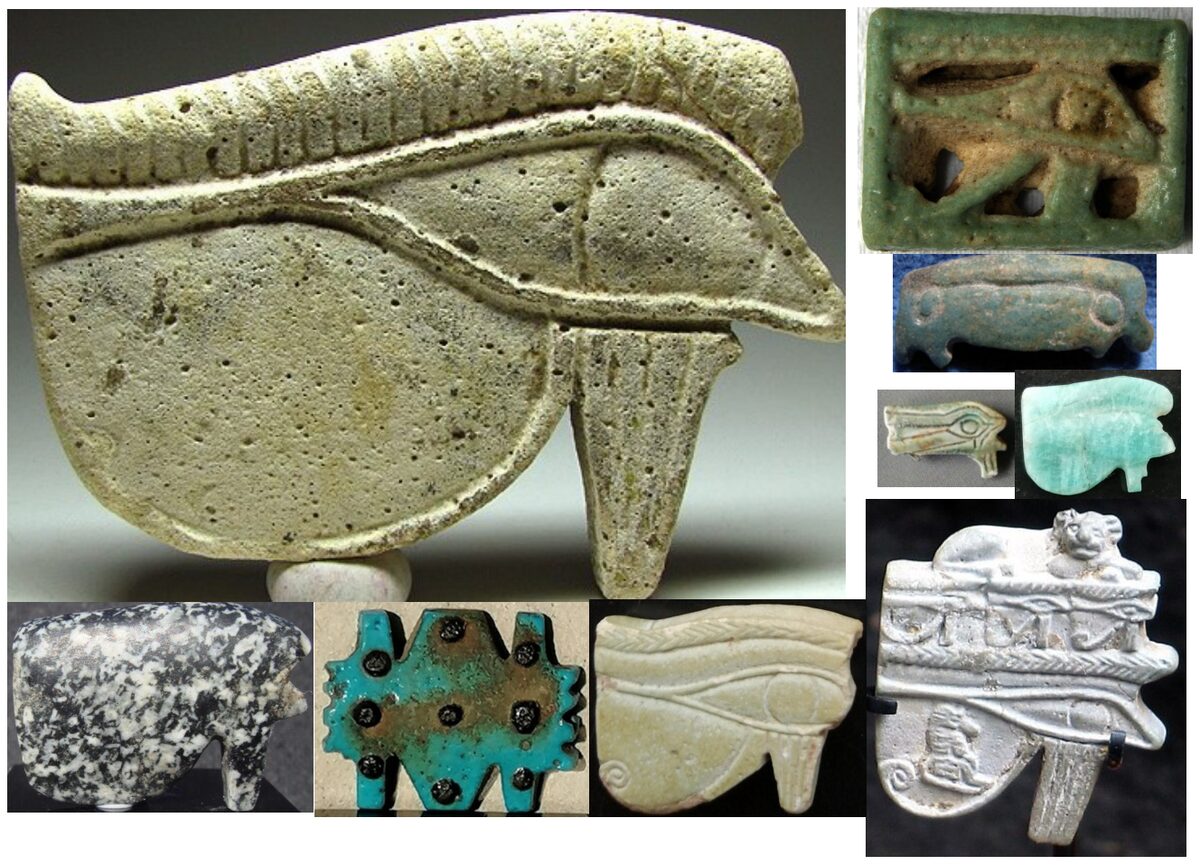
Unusual wedjat eyes. Huge, pale green glazed: Late Period; openwork green glazed spacer bead with Hathor cow on reverse: Dynasty 22; green/blue chrysoprase double wedjat: ultra-rare, no parallel; green glazed steatite: Dynasty 21; incised amazonite: before Dynasty 22; biconvex diorite: Third Intermediate Period; quadruple blue glazed with black encrustations: Dynasty 22-24; finely incised green glaze and composite: Late Period. L 1.2-10.5. Private collection DA
At least 500 types of amulets
Nowadays at least 500 types of amulets are known. Some are unique or have only a few duplicates or parallels.
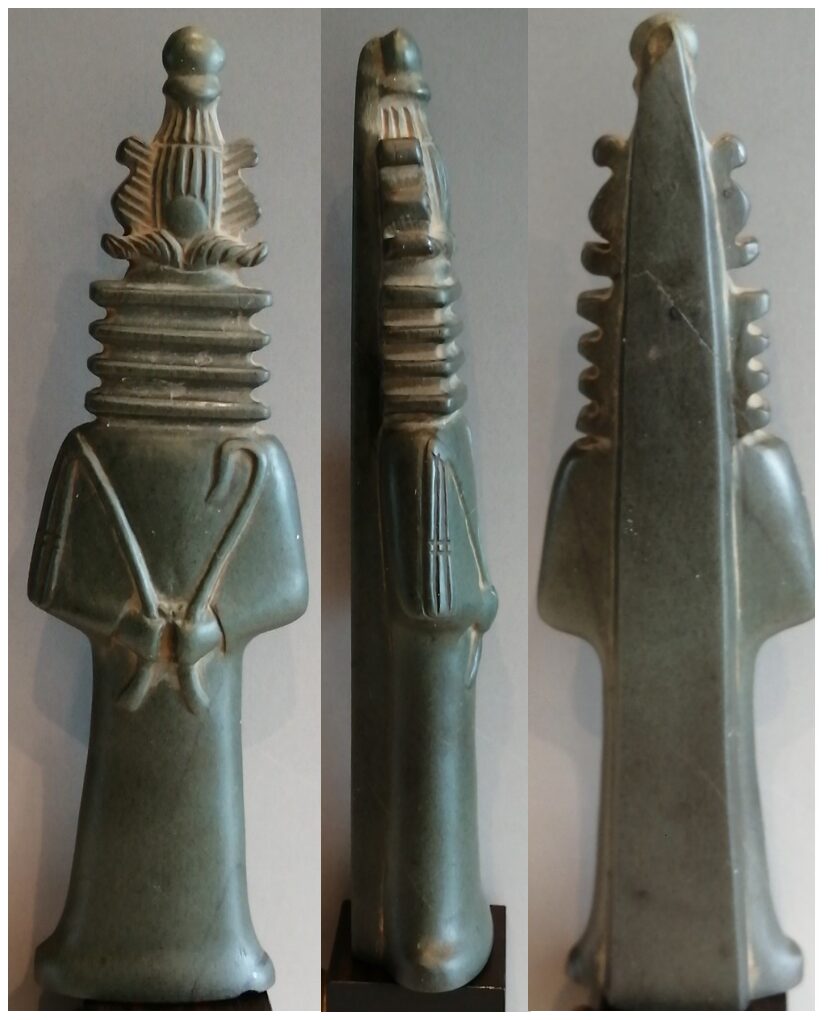
Siltstone djed pillar with human arms holding crook and flail, surmounted by atef crown, i.e. symbols connected to Osiris H 12.1, presumably Saite Dynasty 26. Private collection DA
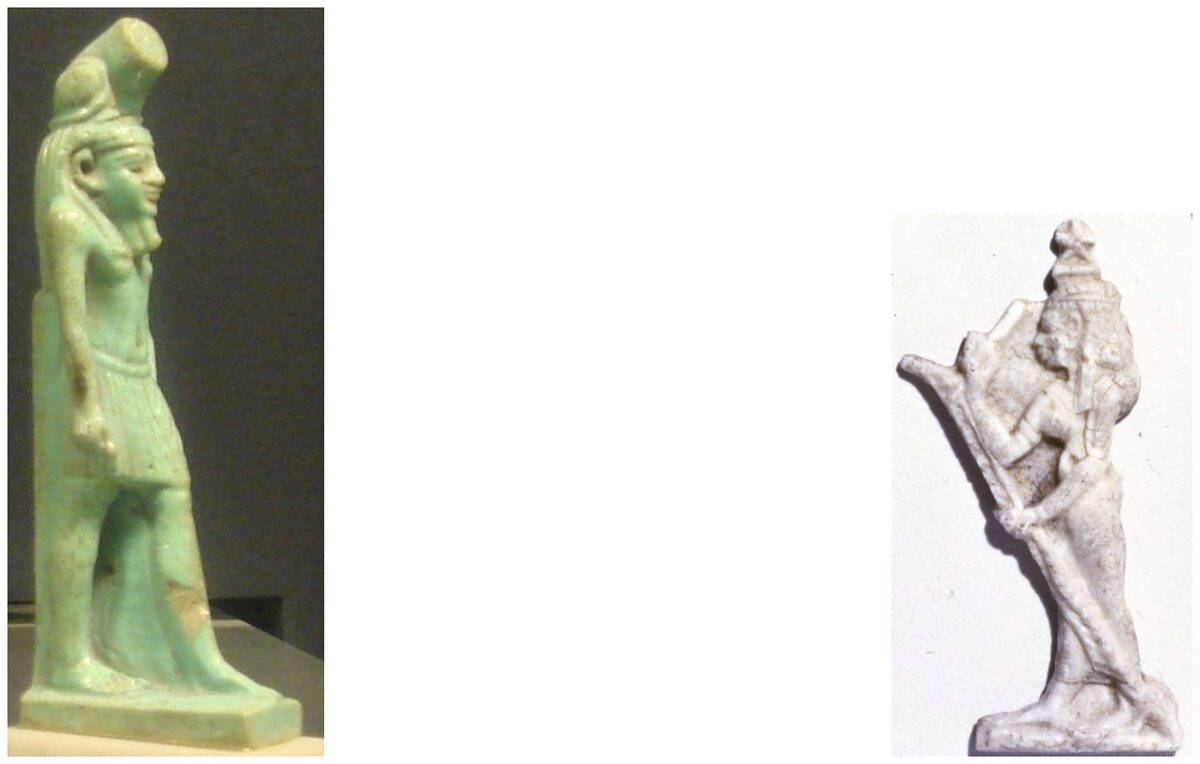
Green glazed Heka (god of magic) H 8.0, Late Period, Musée du Louvre #E 4875, © Photograph D. Attaix; white glass Seshat (goddess of writing) H 5.0, Ptolemaic Period, © The Trustees of the British Museum #EA59412
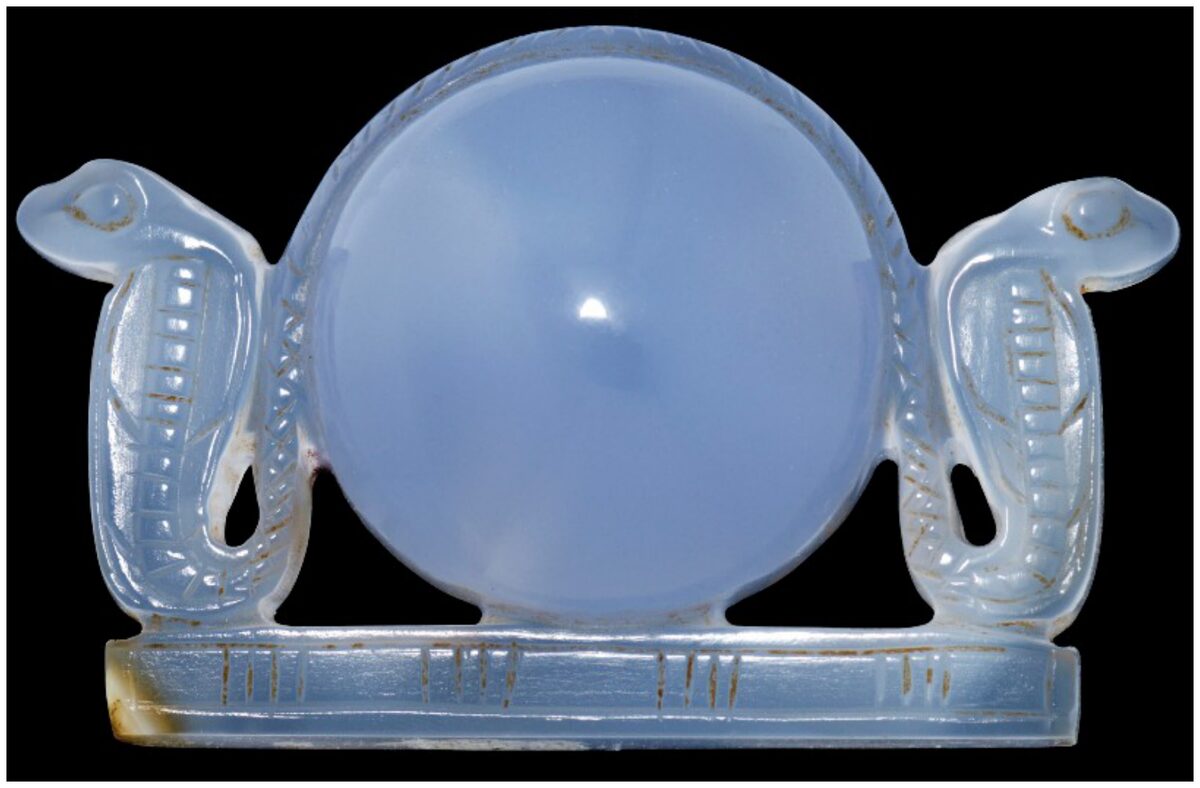
Blue chalcedony sun disc flanked with cobras L 3.8, Late Period. Christie’s Sale 17459 Antiquities, lot 112, 29 April 2019
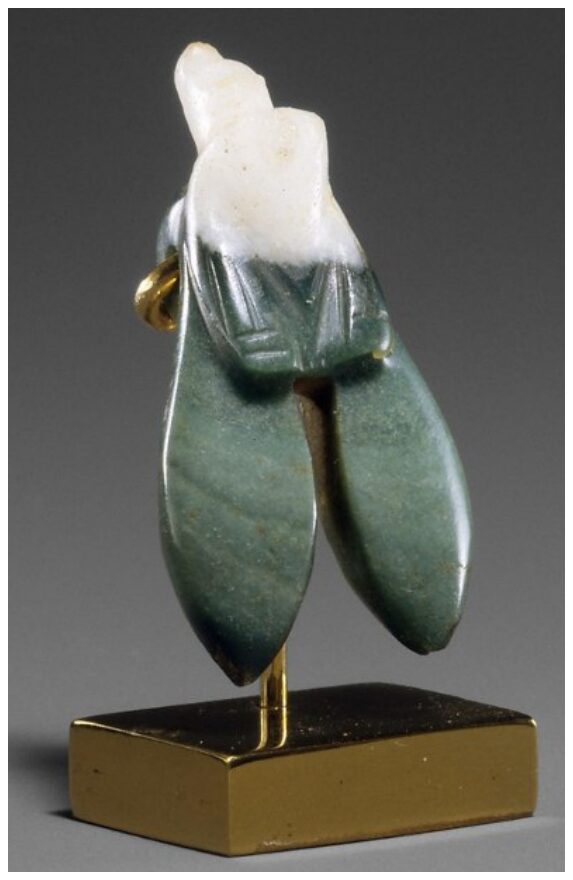
Green and white banded jasper human-headed mosquito deity H 3.0, Late Period. The Metropolitan Museum of Art #55.172
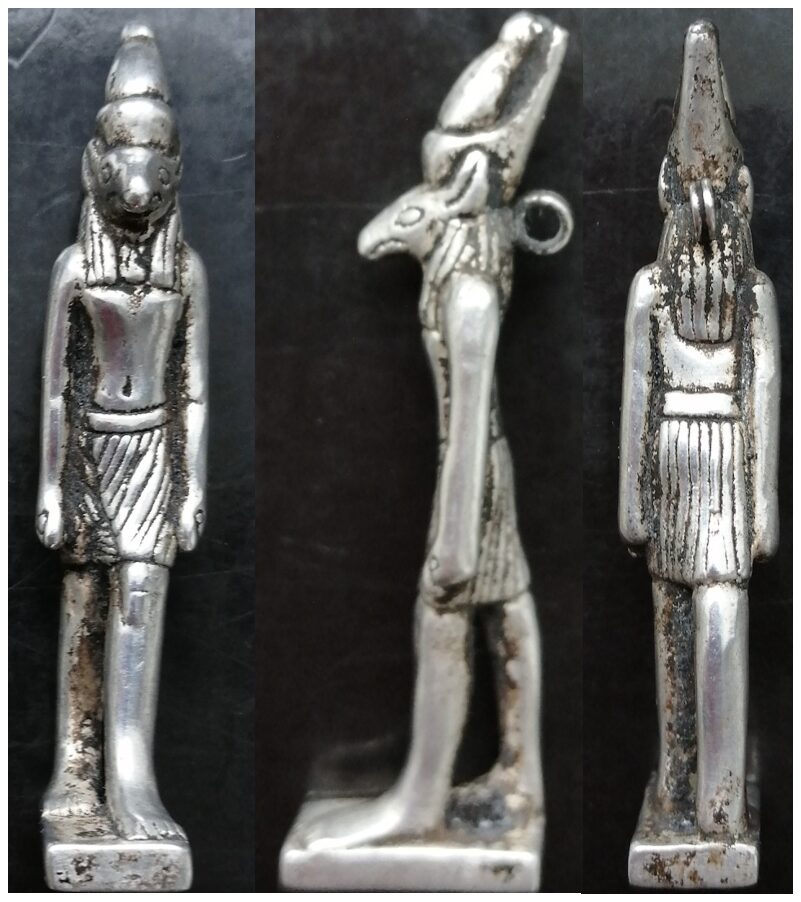
Hollow silver Seth wearing the double crown H 5.6, New Kingdom, Ramesside Period, Dynasty 19. Private collection DA
Epilogue and legacy
The fascinating world of amulets provides additional information on the Egyptian believes, which were intrically mixed in the everyday life and in the other world for eternity.
Everybody, living or dead, wore amulets. The poorest individuals managed with home-made ones in easily workable materials such as wax, wood or steatite.
We will never get ‘A complete amulets of ancient Egypt’. There are numerous undescribed and unknown ones in both museums and private collections. Thus, do not refrain to contact me: collectively, we can for sure add to this survey as much as possible.