‘False’ amulets
Many small Egyptian objects look like amulets but were not made to be worn as such. They are often sold or published as amulets. This page reviews the main categories of these ‘false’ amulets, from large temple offerings to weights.
Large amulets
Amulets too large to be worn were temple offerings or were placed in domestic shrines, but rarely in mummy bandages.
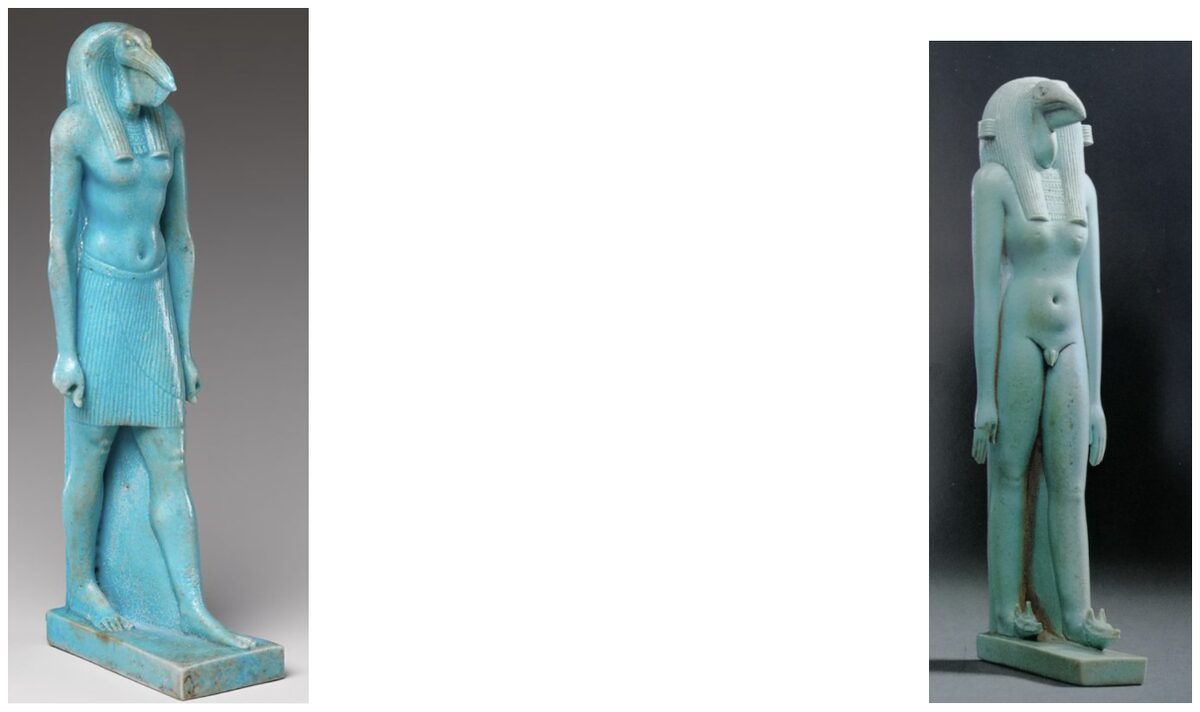
Glazed ibis-headed striding god Thoth. Left: H 14.1, Ptolemaic Period, MET #26.7.860. Right: H 13.0, Dynasty 26, Myers collection
Figurines
Already in the Early Dynastic Period, Egyptians deposited figurines of wild animals in temple precincts. They were reintroduced in Dynasty 12, but as a component of burial equipment and with new species added to the repertoire. The controlled representation of animals may have assured the Egyptians of eternal safety, though they also likely had symbolic meanings1.
Peculiar figurines of bowl rims
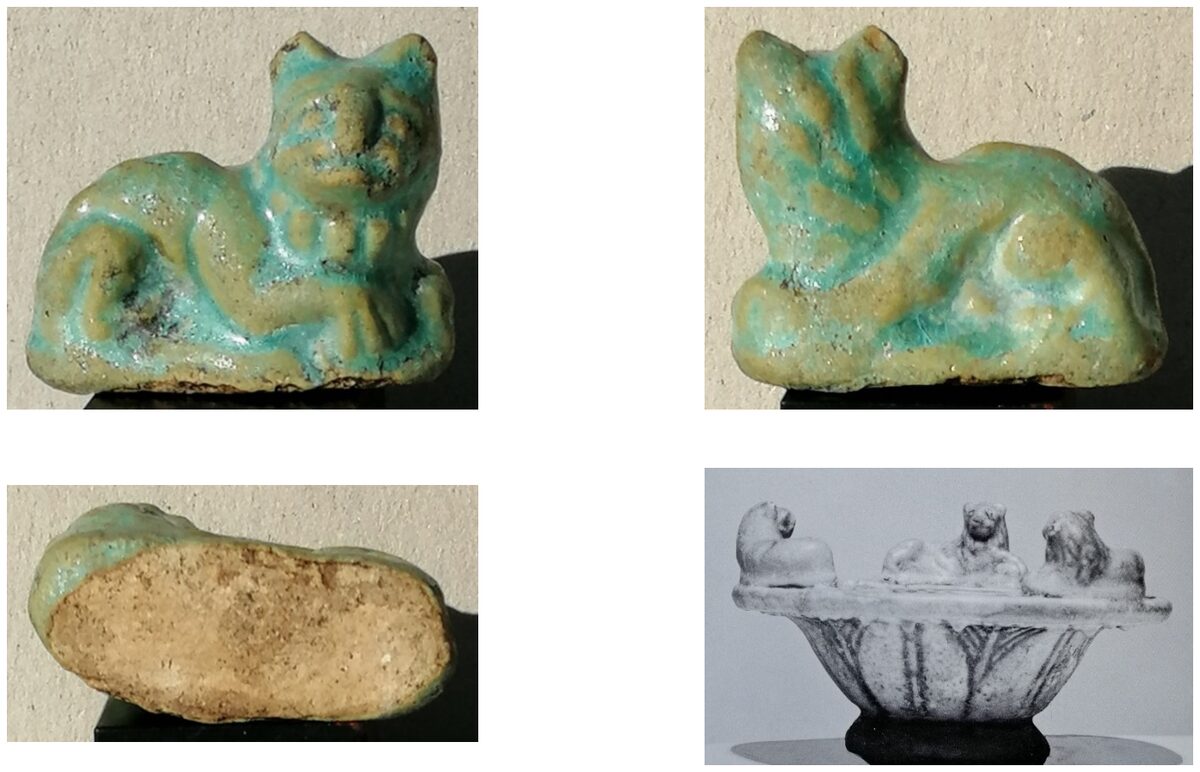
Lion figurine from a bowl cup. The bottom is not glazed. L 3.7, Roman Period. Private collection DA
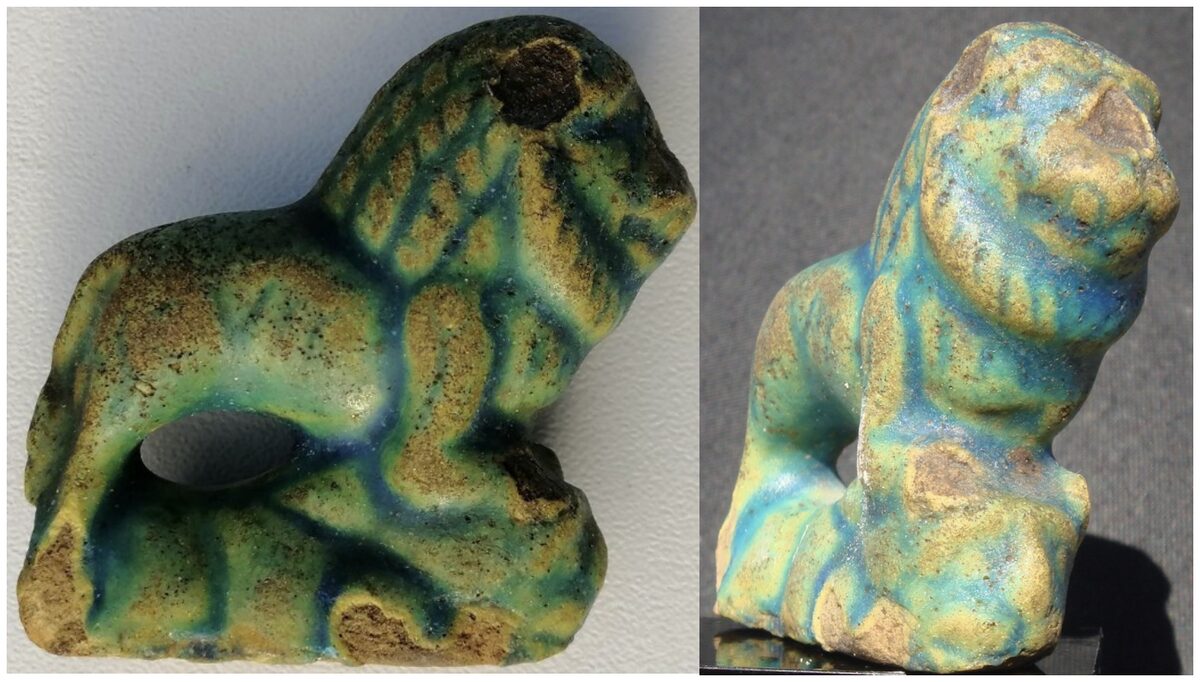
Unusual damaged lion figurine from a bowl cup. British Museum interpretation: the standing lion symbolizes the Pharaoh dominating a lying creature, which might represent the enemies of Egypt. L 4.4, Roman Period. Private collection DA
Reference
1 See the description of the MET #26.7.900, 26.7.901, 26.7.899 referring to the description of jerboa figurines
Amuletic inlays
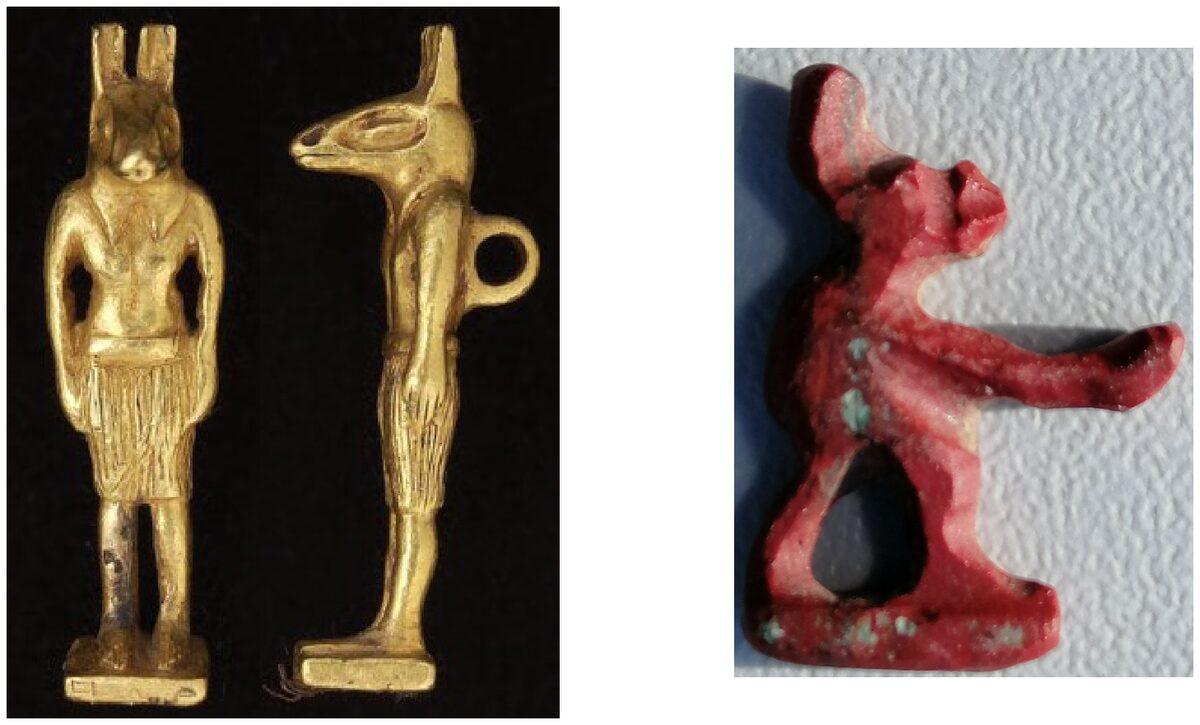
Gold god Seth H 2.0, Dynasty 17?, © 2002 Musée du Louvre/Christian Décamps #E 7659; red jasper Seth inlay H 1.8, Ramesside Period?, Private collection DA
Glass multicoloured inlays
Multicoloured glass bars and inlays from the Graeco-Roman Period depict deities, animals, birds, floral motifs, etc.
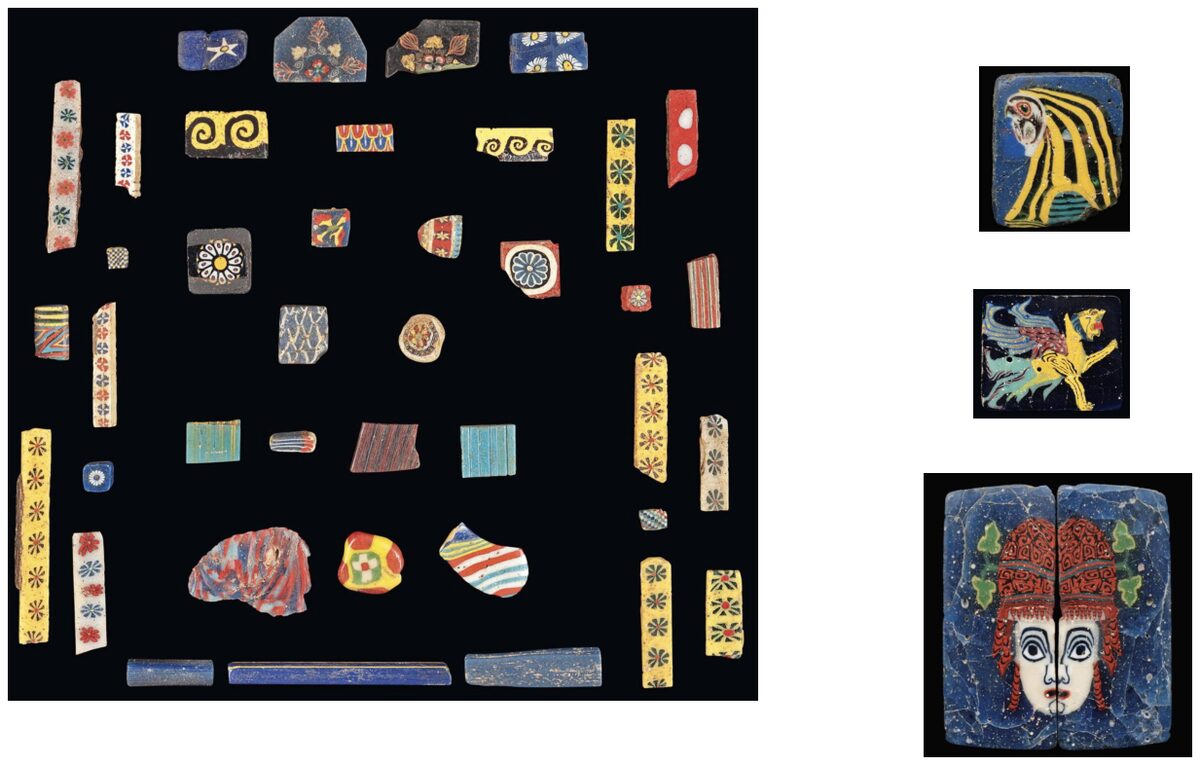
Mosaic glass bars and inlay fragments, Graeco-Roman Period, lot 69, maximum L 5.0; falcon head H 2.3, W 1.8, lot 87; griffin L 1.9, H 1.7, lot 105; maenad head H 3.8, W 3.4, lot 106. All inlays from Christie’s, The Groppi Collection Sale 7758, 26 April 2012
Many inlays were sliced from a bar of mosaic glass, so that both sides are symmetrical.
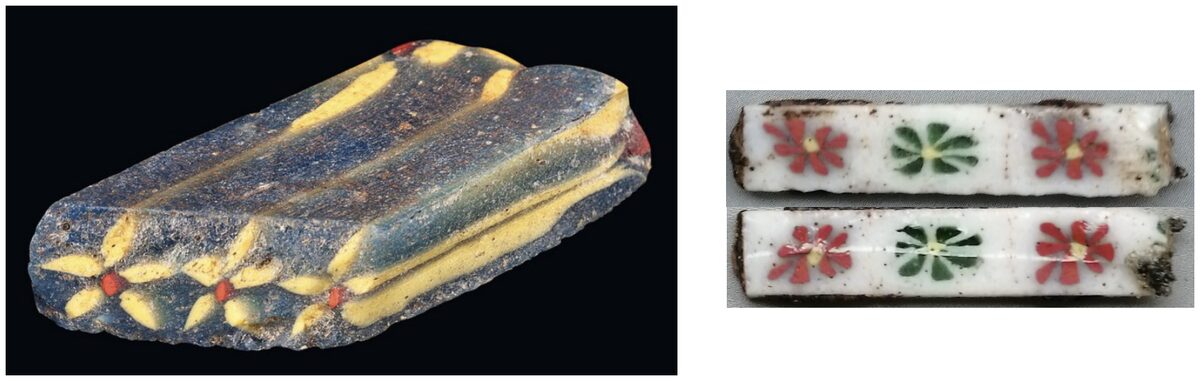
Bar of glass with three red dotted yellow flowers on dark blue matrix L 5.0, W 1.9, H 0.9, Christie’s The Groppi Collection, Sale 7758, lot 66, 26 April 2012; both sides of a resulting inlay sliced from a bar, with three yellow dotted green and purple flowers on white matrix L 2.6, H 0.7, T 0.3, Private collection DA
Decorative faience elements of walls
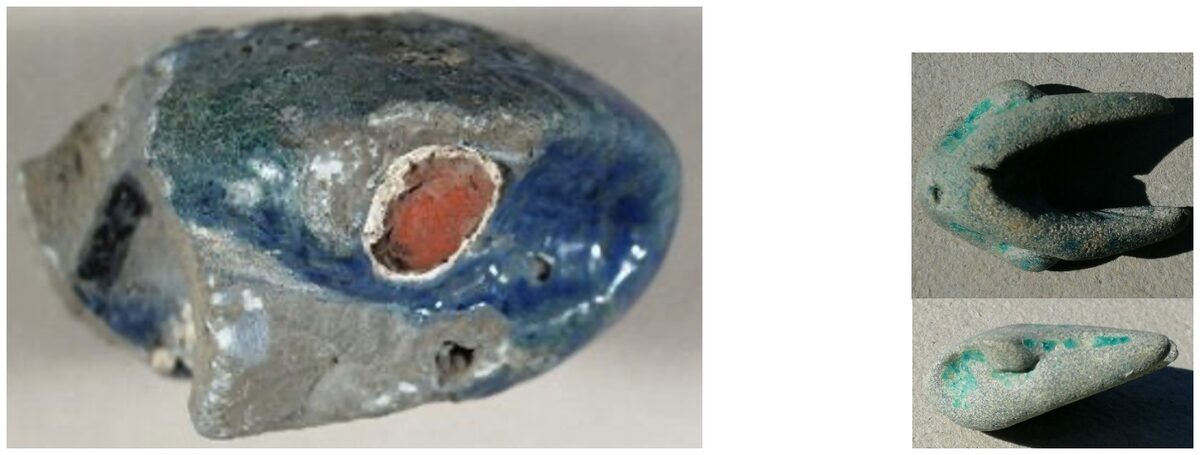
Heads of cobras in decorative friezes of houses of Tell el-Amarna. Blue, red and white glaze L 5.5, New Kingdom, late Dynasty 18, Amarna Period, National Museum of Ireland, Dublin; green glaze L 2.5, New Kingdom, late Dynasty 18, Amarna Period, Private collection DA
Foundation deposits
Foundation deposits were buried at specific points, such as the corners of buildings, during foundation, to ensure their effectiveness and longevity. They include pottery, basketry, food offerings and model tools.
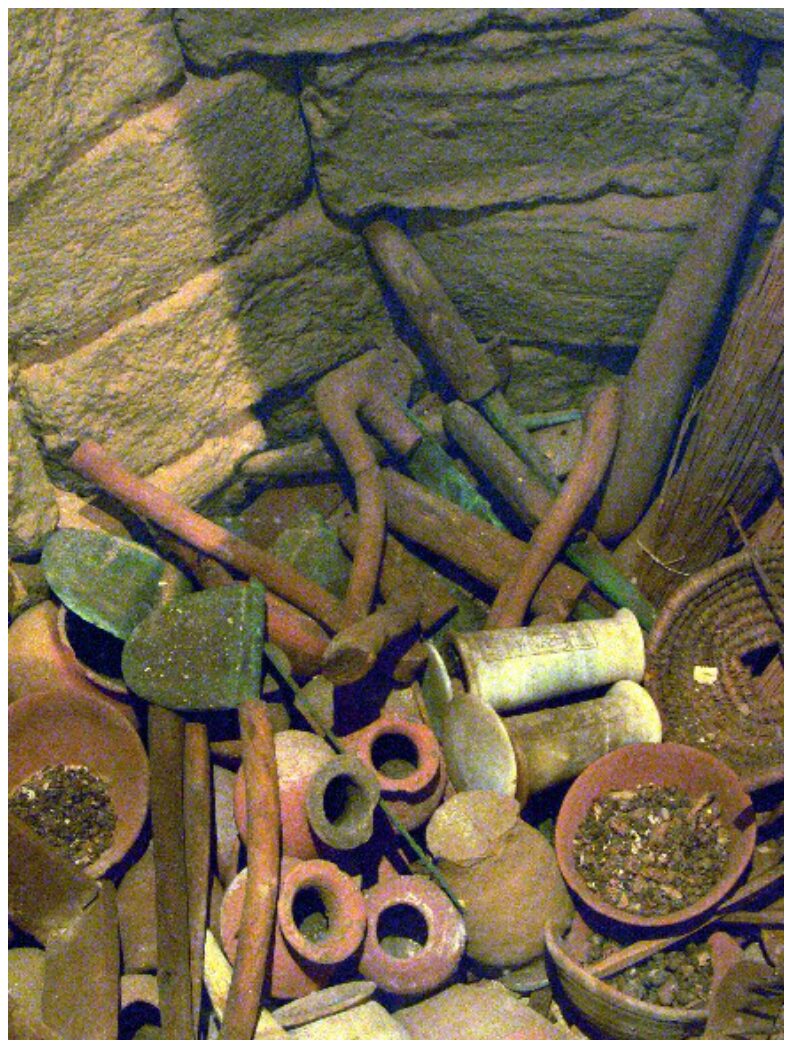
Reconstitution of a foundation deposit, New Kingdom, Dynasty 18. The Metropolitan Museum of Art
But they also include pseudo amulets and faience plaques with no means of suspension.
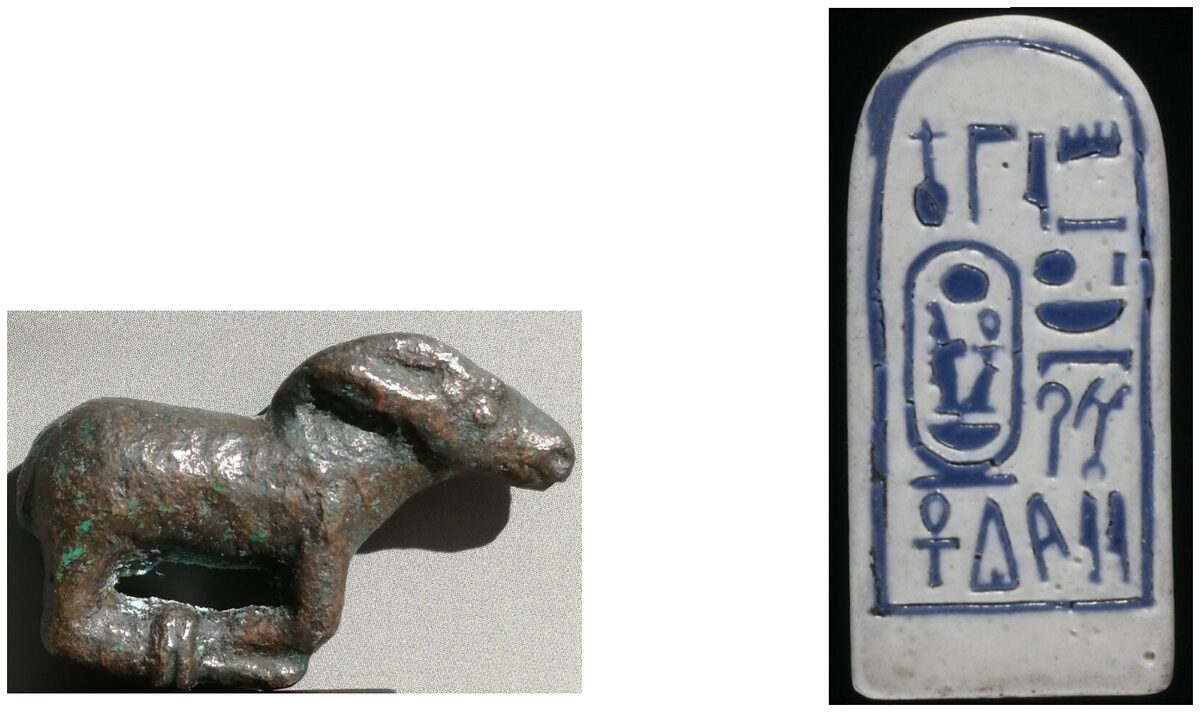
Copper alloy trussed ibex L 3.3, presumably Late Period, Private collection DA; blue and white glazed cartouche of Amenhotep III H 4.3, New Kingdom, Late Dynasty 18, © 1998 Musée du Louvre/Georges Poncet #E 3043
Spacer beads
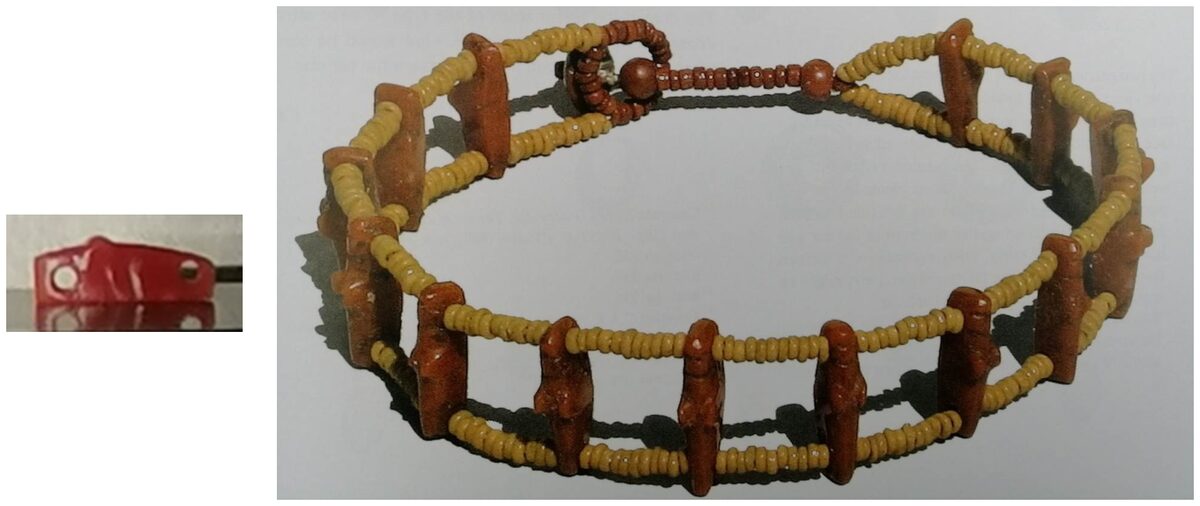
Spacer beads of bracelets. Left: grasshopper in carnelian L 1.1, T 0.2, Private collection DA. Right: reconstruction of a bracelet with grasshoppers in red jasper and faience beads, New Kingdom, Dynasty 18, W. Arnold Meijer collection, ex-Allard Pierson Museum, Amsterdam
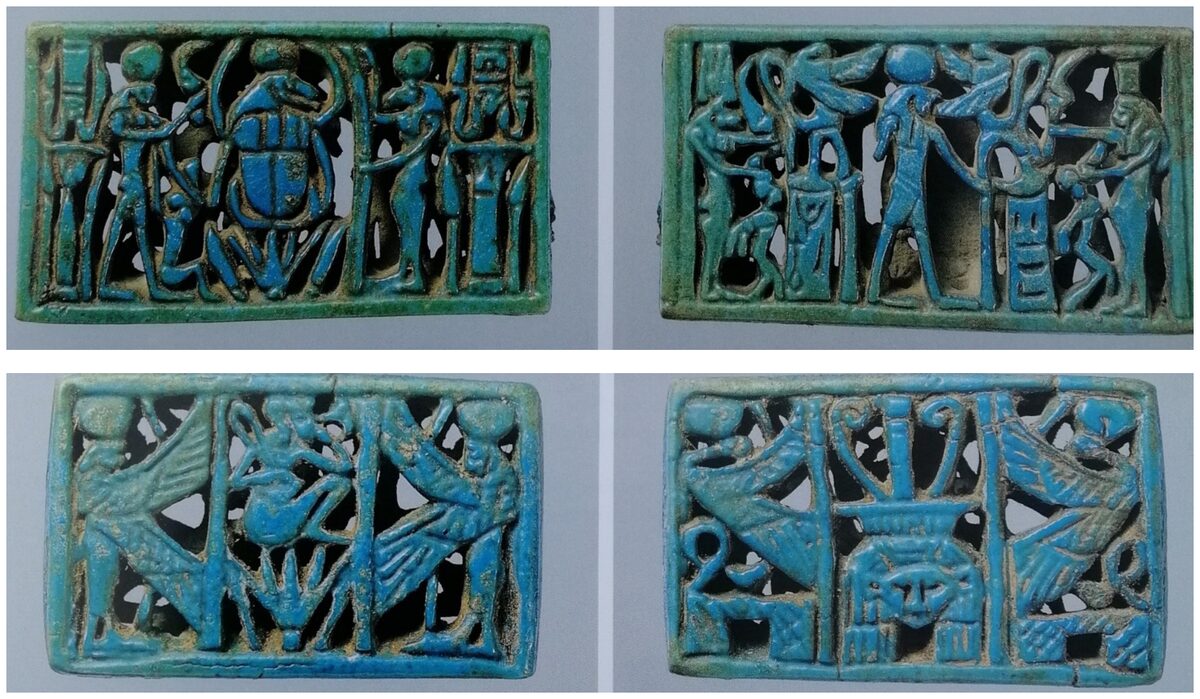
Spacer beads of collars. Green/blue glazed openwork spacer beads L 5.5 to 6.0, Third Intermediate Period, Myers collection
Gaming pieces
Gaming pieces mostly have a round base.
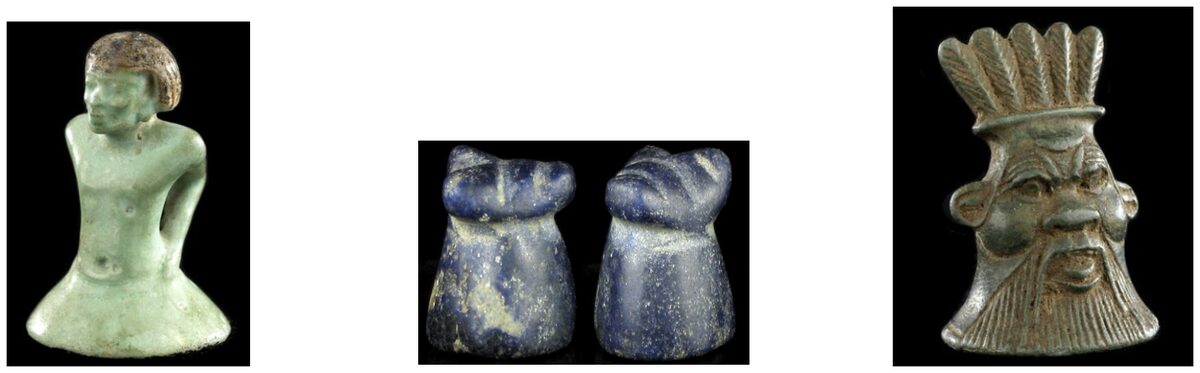
Green and black glazed Nubian prisoner with bound arms H 2.2, Ø 1.5, New Kingdom?, © 2012 Musée du Louvre/Georges Poncet #E 8396; dog or jackal head in lapis lazuli H 1.4, Ø 1.2, New Kingdom?, Private collection DA; green glazed god Bes head H 2.3, Ø 1.7, undated, © 2012 Musée du Louvre/Georges Poncet #E 22693
Vessels with amuletic connotation
Such containers were costly presents offered to high-ranking ladies throughout dynastic times. The two containers with monkeys have been reproduced in actual amulets.
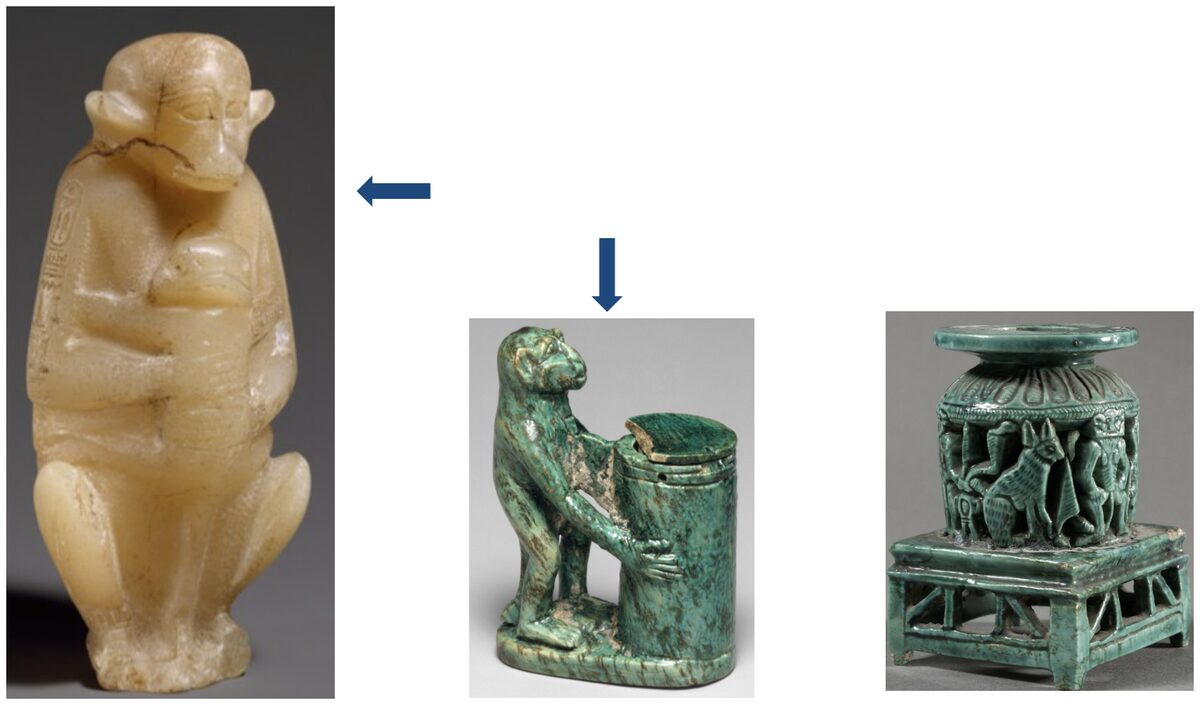
Alabaster vase of a mother monkey holding her baby H 13.7, Old Kingdom, Dynasty 6, MET #1992.338; green glazed steatite kohl tube held by a monkey H 6.0, New Kingdom, early Dynasty 18, MET #1989.281.101; green glazed steatite kohl container with god Bes, cat, cobra, etc. H 6.0, presumably Third Intermediate Period, © 2003 Musée du Louvre/Christian Décamps #N 1362
Coffin-fittings
Wooden coffin-fittings with terracotta Medusa heads were highly common in early Ptolemaic Period cemeteries, i.e. in Naukratis1. They served as repellent protective devices, like actual Medusa amulets.
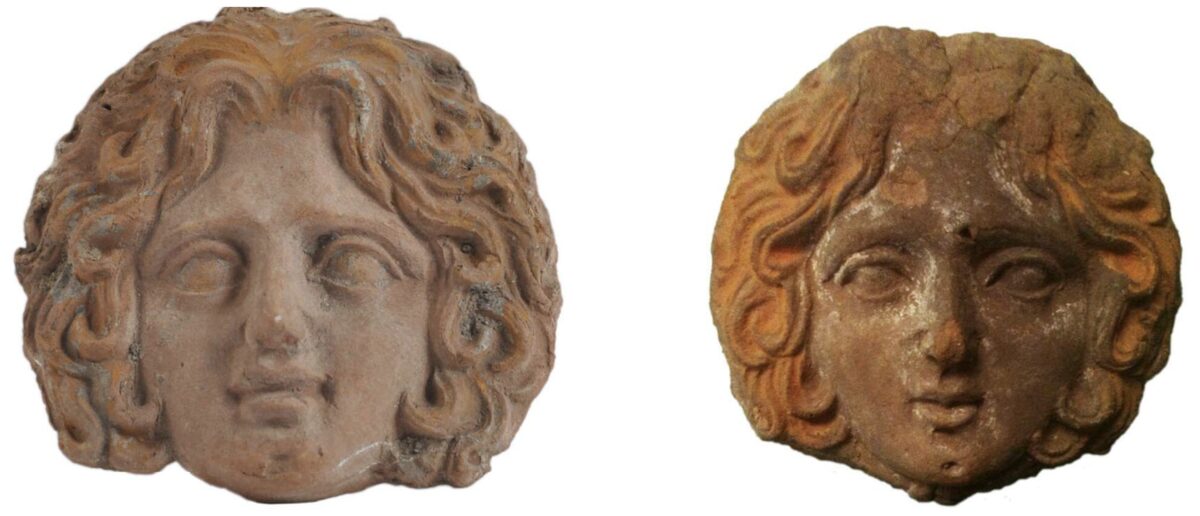
Medusa head coffin-fittings. Terracotta W 7.0, H 6.0, T 2.0, early Ptolemaic Period, © The Trustees of the British Museum #CG33120; terracotta W 6.5, H 6.5, T 1.7, early Ptolemaic Period, © Birmingham Museums Trust #1888A200.2
Reference
1 See the descriptions of the British Museum
Amulet cases
A number of bronze1 or wooden2 cases with animal representations are reported as protective amulets1. They include depictions of mammals (i.e. shrew mouse), fishes and reptiles (i.e. snakes), to prevent diseases1 or to place their owners under the protection of the fetish animal of a god or goddess. They contained animal mummies. Many bronze ones have suspension loops. All are of the Late Period.
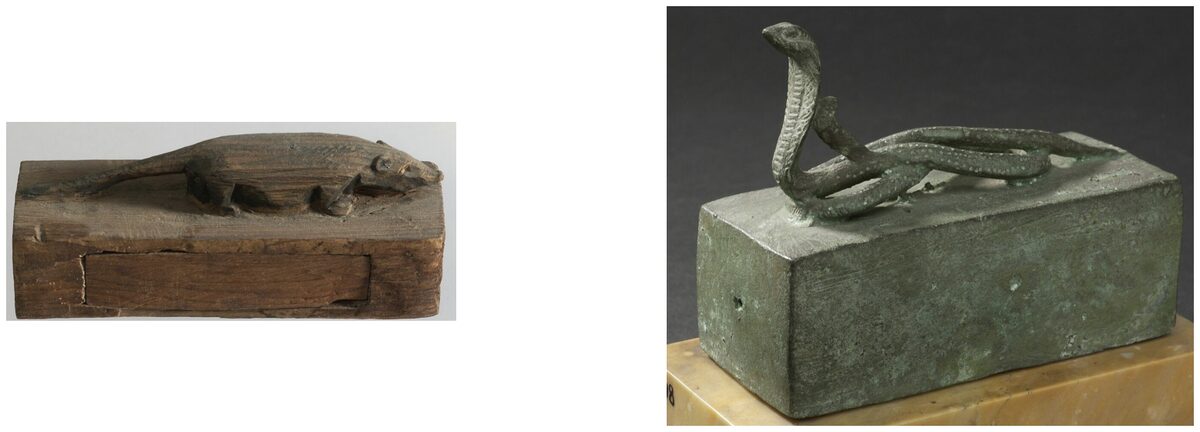
Wooden case of a shrew mouse L 8.2, H 3.3, W 2.8, © 2004 Musée du Louvre/Christian Décamps #E 264; copper alloy case of a cobra L 10.2, H 8.0, W 4.5, © 2004 Musée du Louvre/Christian Décamps #N 5198
References
1 Petrie W M F. Amulets, 1914. p. 26, Figs. 98-103
2 Ref. #25 Guichard H., 2014. p. 306, nos. 340a,b,c,d
Weights
Conventional weights
Most weights of various shapes are in different stones1.
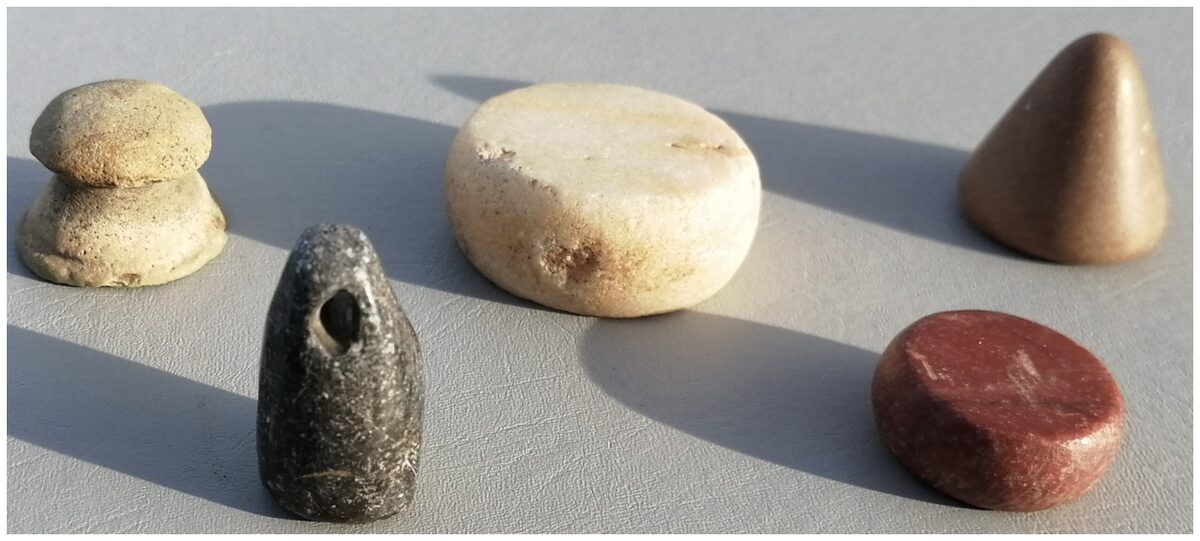
Group of weights in stones, with a faded green glazed one on the left and a grey pierced metallic one. Maximum Ø 3.0. Private collection DA
Animal-shaped weights
However, several figurines of animals are weights2, composed of two metals. These hollow copper alloy figurines are filled with another alloy to obtain the expected measure of mass2.
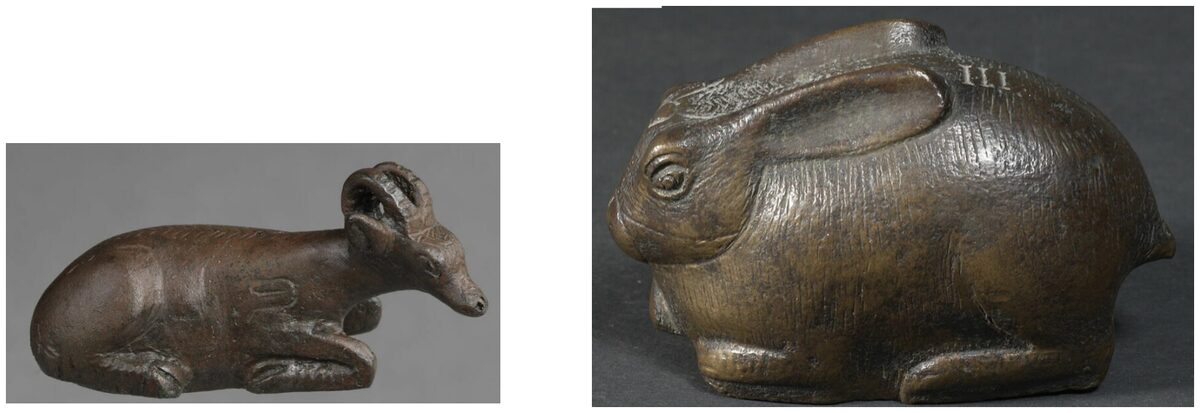
Ibex L 6.0, H 3.1, W 2.2, weight 92.4 g (one deben, which is engraved on the weight), New Kingdom, © 2018 Musée du Louvre/Christian Décamps #E 11684; rabbit L 8.0, H 5.1, W 4.0, weight 274.5 g (three debens, which is engraved on the weight), Late Period, © 2003 Musée du Louvre/Christian Décamps #N 4004 B
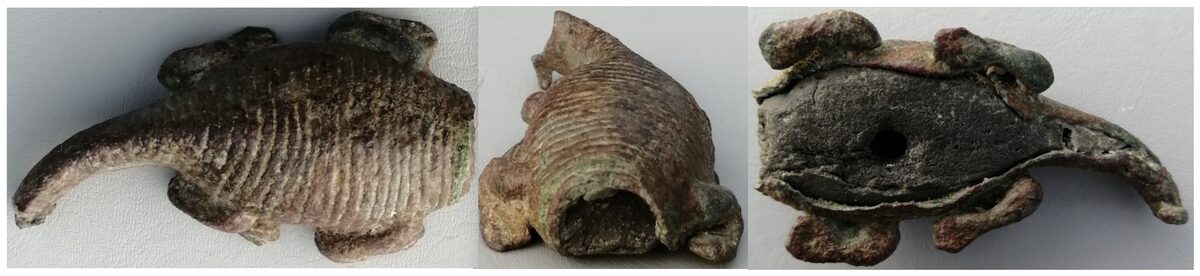
Hollow copper alloy headless reptile filled with another grey alloy L 6.4, W 3.7, H 1.9, New Kingdom, Dynasty 18 or 19. Weight is 53 g3, close to 5 qedets. From the New Kingdom onwards, the deben (about 91 g divided into 10 qedets) was the Egyptian mass unit. Private collection DA
References and comment
1 Petrie W M F. Ancient weights and measures illustrated by the Egyptian collection of University College, London. London Department of Egyptology, University College, Gower Street, 1926, pp. 51 with LIV Plates
2 See the description of the Louvre #E 11684 above
3 Petrie (1926, see above) reports many weights in the range of 45-55 g. Thus, this weight probably never had a head (no clear break is apparent) and has a mass consistent with reported weights. The hole under the base in the grey alloy was probably made to remove an excess of mass compared to a poor/approximate five qedets standard