In much rarer snake form1, Nehebu-Kau has typically a short upcurled tail tucked in at the back and human arms supporting his head, as below the left example1,2. Materials include mostly faience, and barely others. These variants also appeared in burials of the Third Intermediate Period onwards1
Unscaled Pictures


Unusual in carnelian
H 2.4, W 0.7, D 0.9
Third Intermediate Period onwards
Private collection DA
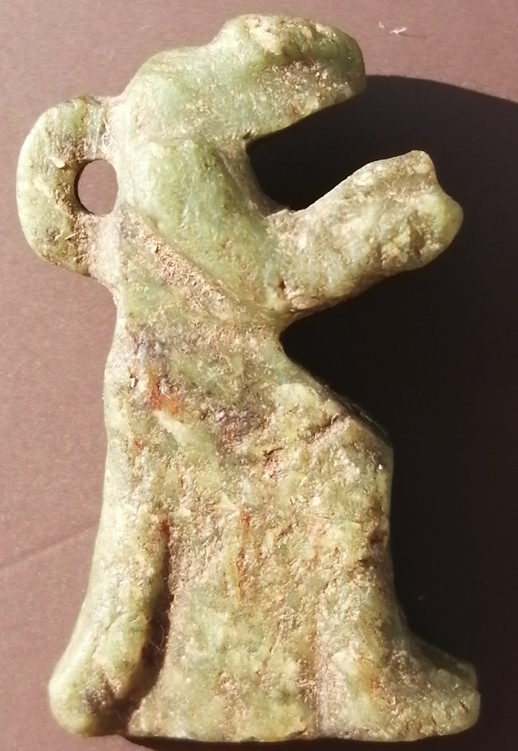
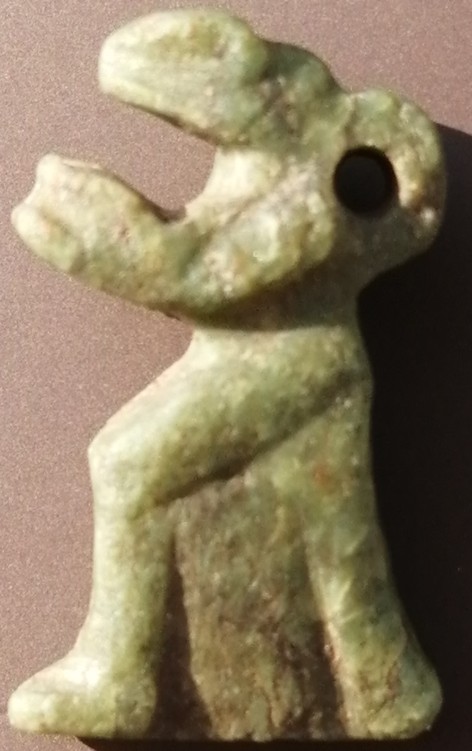
Unusual in phrenite
H 2.9, W 0.6, D 1.3 Third Intermediate Period onwards
Private collection DA
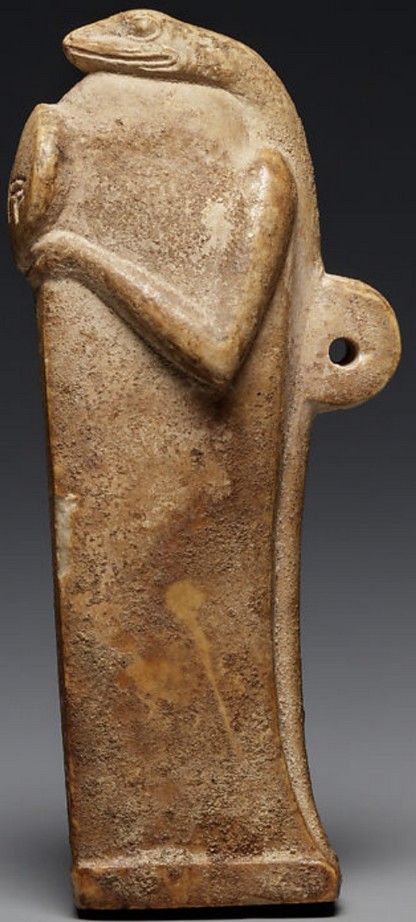
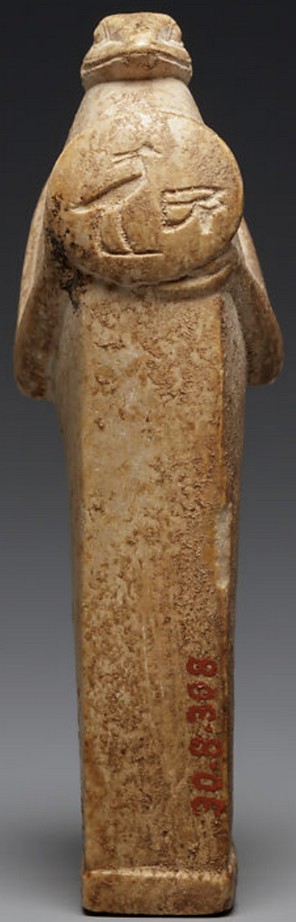
Limestone presenting a disc with an egret and a wedjat
H 6.9, W 2.1, D 3.0 Late Period Dynasty 26-29 MET#30.8.308
Reference1 and Note2
1Andrews C. Amulets of Ancient Egypt, 1994, p. 26 and Fig. 22c
2This snake form is frequently represented on the sides of enthroned goddesses